Post by : Anees Nasser
For years, Apple’s voice assistant, Siri, has struggled to keep up with its competitors—particularly those powered by ChatGPT and Google’s AI solutions—in terms of natural language comprehension and proactive intelligence. Delays in the internal development of AI models combined with shifts in leadership left Apple lagging in a fiercely competitive technology arena.
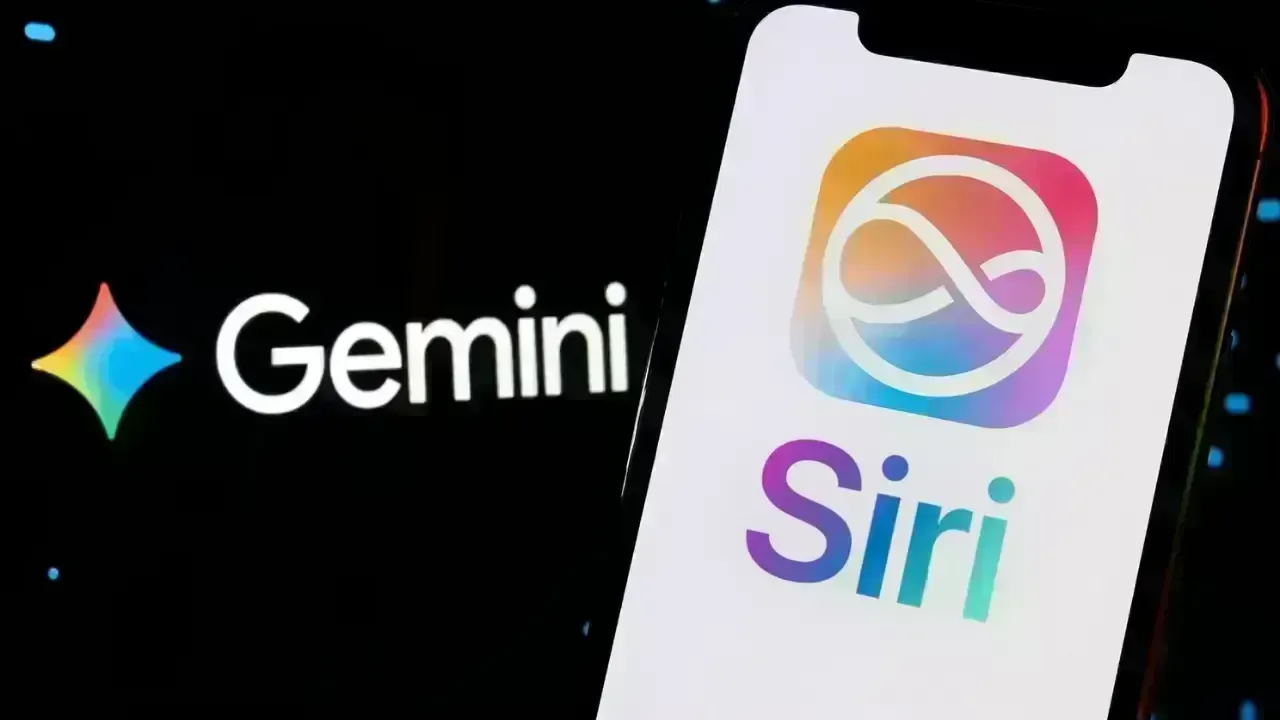
In January 2026, Apple announced a multi-year partnership with Google, making Gemini AI the cornerstone of future Apple Intelligence and leading to a major redesign of Siri planned for later this year. This collaboration allows Apple to incorporate Google’s advanced models and cloud infrastructure instead of relying solely on its internal efforts.
This strategic move not only deepens Google’s AI integration within Apple’s ecosystem but also represents a decision to leverage Gemini rather than developing an alternative to ChatGPT independently—at least for the foreseeable future.
Apple’s decision to adopt Gemini is driven by several key factors:
Gemini’s multilingual proficiency, extensive knowledge, and robust architecture have made it one of the leading AI systems currently available. Google’s substantial investments in search-based reasoning and its wide array of services enhance Gemini’s capabilities across various generative and conversational applications.
Apple's ambitions in AI—including anticipated upgrades for Siri—have faced numerous delays. Partnering with Google enables Apple to expedite the rollout of advanced AI functionalities without the need to wait for internal models to catch up.
Effectively deploying extensive AI models requires substantial infrastructure. Rather than creating a large-scale AI cloud from the ground up, Apple will leverage Google’s cloud technology along with Gemini models to support a wide range of devices, offering reduced initial costs.
This partnership builds on a longstanding relationship; Apple has long utilized Google’s services, such as providing default search options in Safari. Amplifying this alliance with AI follows Apple’s trend of selectively adopting external technology instead of attempting to control all innovations.
One of the most noticeable effects of this partnership will be on Siri, where users will experience enhancements such as:
Natural Language Understanding: Improved comprehension of user queries, capturing context and subtlety more accurately.
Conversational Memory: The ability to remember context during longer dialogues and refer back to previous statements.
Multimodal Inputs: Integration of various input methods including text, images, and possibly voice.
Contextual Awareness: Responses that are informed by the state of the device, the user’s history, and preferences, while prioritizing privacy.
Although Gemini will power intelligence features, Apple assures that all processing will occur on its own devices and Private Cloud Compute, maintaining strict privacy safeguards.
Prior to the Gemini agreement, Apple had integrated ChatGPT into Siri in a limited, opt-in framework for more complex queries, allowing users to momentarily access OpenAI’s generative AI. With the new partnership, it appears that ChatGPT's function on Apple devices will shift toward a more supportive or specialized role rather than being the core intelligence for Siri.
In light of these developments, OpenAI is reportedly speeding up advancements in its models and hybrid solutions to remain competitive. While Apple has not confirmed plans to eliminate ChatGPT's integration, analysts predict it will be used for specific tasks, with Gemini managing general interactions.
Apple has long promoted its ecosystem as centered around user privacy through on-device processing and limited data sharing. However, the partnership with Google poses questions about how this promise aligns with external AI integration:
Apple asserts that Gemini models will operate on Apple’s Private Cloud Compute, ensuring computations and personal information remain distinct from Google’s main systems.
Nonetheless, critics suggest that introducing third-party AI could introduce new privacy risks, even when Apple oversees the integration.
Striking a balance between advanced AI functionalities and safeguarding user privacy will be vital for maintaining trust as the new Siri features are launched.
The partnership between Apple and Google carries broader implications for the competitive landscape of AI technology:
With Android devices, Search, YouTube, and now Apple devices utilizing Gemini for fundamental AI operations, Google's presence in the consumer AI space has grown significantly. Alphabet's market valuation recently surpassed $4 trillion—a landmark achievement influenced by investor confidence in its AI future.
OpenAI's ChatGPT was previously viewed as a leading potential AI partner for major platforms. This pivot by Apple to Gemini redirects OpenAI to focus more on specialized roles or integration in contexts where cognitive processing or creative duties are emphasized.
Individuals like Elon Musk have expressed concerns that this alliance could position Google with disproportionate influence in AI, potentially disrupting competition and privacy practices across the sector.
This shift indicates that future advancements may hinge on strategic collaborations rather than mere competition, particularly as hardware, services, and cloud innovations intersect with AI developments.
For the average user, the repercussions of this partnership could be significant:
A more intelligent Siri capable of managing context, engaging in turn-by-turn dialogue, and addressing complex inquiries with heightened sophistication.
Enhanced AI-driven features across iOS and macOS—including tailored recommendations, predictive assistance, and dynamic workflows.
Continued incorporation of generative AI into Apple's applications like Notes, Messages, and Mail.
However, some users and advocates for privacy remain apprehensive about the deeper integration of external AI technologies into critical device features, despite stringent privacy measures.
Not everyone views the partnership favorably. Some analysts contend that:
Apple has accepted that it cannot develop a top-tier AI assistant independently;
Reliance on a competitor's foundational models could hinder Apple's unique market position;
Long-term dependencies may hamper Apple's potential for independent innovation in AI.
Despite these critiques, many industry observers acknowledge that leveraging superior AI technology—even from rivals—may be the swiftest way to provide value to users.
As Apple prepares to launch Gemini-enhanced Siri and additional AI capabilities later in 2026, the industry will monitor developments closely. Key queries include:
Will the revamped Siri equate to or surpass the experiences offered by ChatGPT-enabled assistants?
How will Apple effectively manage privacy, data practices, and user expectations?
What competitive actions will OpenAI, Microsoft, and others undertake in response?
This multi-year partnership lays the groundwork for new manners of AI cooperation and competition that may define the consumer technology landscape over the forthcoming decade.
This article integrates insights from publicly available information and industry evaluations regarding Apple’s collaboration with Google to implement Gemini AI models for Siri developments as of January 2026. Details are subject to modifications following official product announcements and releases.










Anticipated Dates for UAE Eid Al Adha 2026 Unveiled by Astronomical Experts
Experts predict Eid Al Adha 2026 in the UAE to start on May 27, prompting early holiday planning amo

DAE Achieves Remarkable Growth in Q1 2026 With Record Revenue
Dubai Aerospace Enterprise announces impressive financial results for Q1 2026, reflecting a surge in

Price Increase for Sony PS5 in Southeast Asia Effective May 1
Sony announces a price increase for the PS5 across Southeast Asia starting May 1, 2026, impacting ga

Potential ‘Super El Niño’ in 2026: Understanding the Climate Risks
Could a Super El Niño emerge in 2026? Discover its implications and potential global climate impacts

Global Energy Crisis Intensifies: Markets React to Oil Supply Challenges
Markets are on edge as oil disruptions escalate, influencing prices and economic stability. Explore

Must-See Tourist Spots in London You Can't Overlook
Explore London's essential attractions, from royal landmarks to vibrant markets, ensuring an unforge




