
Post by : Shweta
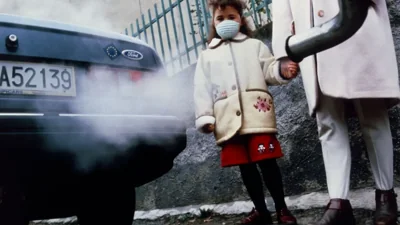
Air pollution stands as a major public health challenge, accounting for millions of fatalities each year and affecting the lives of billions worldwide, regardless of economic status. Health professionals label pollution the “silent killer” due to its gradual and often unnoticed detrimental effects on vital organs such as lungs, heart, and brain.
The World Health Organization (WHO) estimates that air pollution causes nearly seven million early deaths globally every year. The minuscule yet dangerous particles found in polluted air penetrate deeply into the human body, significantly increasing the risk of severe health issues like asthma, lung cancer, strokes, heart attacks, and chronic respiratory diseases. Vulnerable populations include children, the elderly, and those with pre-existing health concerns.
Major urban areas throughout Asia, Africa, Europe, and Latin America grapple with perilous pollution levels stemming from vehicle emissions, industrial fumes, construction dust, factory smoke, and wildfires. The swift pace of industrialization and urbanization has exacerbated air quality issues, especially in densely populated cities, exposing millions to unhealthy air daily.
Researchers highlighted that prolonged exposure to polluted air not only impacts physical health but also has dire implications for mental health and neurological conditions. Recent investigations reveal a connection between heightened pollution levels and increased risks of anxiety, depression, dementia, and developmental challenges in children. Pollutants are believed to interfere with multiple bodily functions.
The issue is further aggravated by climate change, as rising temperatures, droughts, and wildfires escalate the levels of smoke and airborne particulates. Environmental specialists assert that pollution and climate change are deeply intertwined crises requiring prompt international collaboration and the implementation of comprehensive environmental policies.
In less affluent and developing nations, indoor air pollution poses an additional significant threat. Numerous households still depend on traditional fuels like wood, coal, and charcoal for cooking and heating in poorly ventilated spaces. Health organizations indicate that exposure to indoor smoke leads to serious respiratory issues, contributing notably to mortality rates among women and young children.
In response, several governments have enacted stricter environmental policies aiming to curtail pollution. Initiatives to promote electric vehicles, control industrial emissions, and enhance public transportation have shown improvements in air quality in some areas. Nonetheless, experts caution that advancements are insufficient compared to the escalating severity of the problem.
Environmentalist groups are intensifying pressures on global leaders to enforce more stringent regulations on companies that contribute significantly to pollution. Advocacy groups contend that many corporations prioritize profit over the protection of public health and the environment. Human rights organizations increasingly call for clean air to be recognized as a fundamental human right that must be safeguarded by governments.
Air pollution also incurs significant economic repercussions globally. Escalating healthcare costs, decreased worker productivity, and pollution-induced health complications exert immense strain on healthcare systems and national economies. Researchers estimate that billions are lost annually due to health issues and premature deaths linked to air quality degradation.
Awareness around this issue is growing, yet many people still underestimate the long-term risks associated with polluted air. Experts recommend wearing masks in heavily polluted zones, employing air purifiers indoors, minimizing vehicle usage, and advocating for cleaner energy solutions to mitigate personal exposure to pollution.
Global organizations continue to advocate for immediate, coordinated international efforts to tackle air pollution through cleaner energy alternatives, robust environmental legislation, and sustainable urban development. Health specialists warn that without decisive action, pollution-related fatalities may rise sharply as global populations expand and environmental conditions deteriorate.
Analysts assert that air pollution has transcended mere environmental concern; it's now a profound global health emergency. As nations explore economic growth alongside environmental preservation, immediate measures are vital to avert millions of future deaths associated with polluted air.






Suvarna Joy on Education Leadership, Resilience, and Building Purpose Through Adversity in the UAE
Suvarna Joy shares her journey of education leadership, motherhood, faith, and resilience within the

Anticipated Dates for UAE Eid Al Adha 2026 Unveiled by Astronomical Experts
Experts predict Eid Al Adha 2026 in the UAE to start on May 27, prompting early holiday planning amo

DAE Achieves Remarkable Growth in Q1 2026 With Record Revenue
Dubai Aerospace Enterprise announces impressive financial results for Q1 2026, reflecting a surge in

Price Increase for Sony PS5 in Southeast Asia Effective May 1
Sony announces a price increase for the PS5 across Southeast Asia starting May 1, 2026, impacting ga

Potential ‘Super El Niño’ in 2026: Understanding the Climate Risks
Could a Super El Niño emerge in 2026? Discover its implications and potential global climate impacts

Global Energy Crisis Intensifies: Markets React to Oil Supply Challenges
Markets are on edge as oil disruptions escalate, influencing prices and economic stability. Explore




