Post by : Priya
Photo:Reuters
The Middle East has long been a region of complex alliances, deep-rooted conflicts, and powerful geopolitical interests. In recent weeks, tensions have sharply risen again as the United States has publicly urged Israel to stop its military airstrikes in southern Syria. This plea by Washington is not only a diplomatic gesture but also a significant warning about the growing risk of broader conflict in the region. With multiple players involved—state actors, non-state groups, and global powers—the situation in Syria has become a sensitive flashpoint with potentially far-reaching consequences.
Syria’s Long War and Israel’s Role
Syria has been caught in a violent civil war since 2011. What started as a popular uprising against the Assad regime has turned into a complex battlefield involving Syrian government forces, opposition rebels, Kurdish militias, terrorist organizations, and foreign militaries. Over the years, Syria has become a theatre of proxy wars, drawing in Iran, Russia, Turkey, the United States, and Israel.
Israel has remained largely uninvolved in Syria’s internal conflict but has carried out hundreds of airstrikes, mainly targeting Iranian-backed forces, Hezbollah operatives, and weapons depots. The Israeli government sees Iran's growing presence in Syria as a major threat, particularly in the south, near the Golan Heights. By launching these strikes, Israel aims to prevent the establishment of an Iranian military foothold close to its borders.
However, what Israel considers pre-emptive defence, others view as provocative military aggression.
The US Message: A Diplomatic Warning
In early July 2025, the United States officially urged Israel to scale back or halt its airstrikes in southern Syria. The statement came amid growing concern in Washington that these operations could trigger wider instability. The Biden administration reportedly fears that continued attacks could provoke a serious backlash not only from Iran and Syria but also from Lebanese Hezbollah—possibly sparking a regional conflict.
The US has made it clear that while it supports Israel’s right to defend itself, this must be balanced with efforts to avoid civilian casualties and rising regional tension.
A senior US official said, “Our goal is to prevent a major conflict from spreading across borders. We are asking all our allies, including Israel, to act with caution and coordination.”
This rare public message to Israel reflects the depth of concern in Washington over developments in southern Syria.
The Region Under Strain
The airstrikes in southern Syria come at a time when the broader region is already under heavy strain:
Lebanon is facing a severe political and economic crisis.
Iraq is still dealing with instability following years of war and political division.
Gaza remains in conflict between Hamas and Israel.
Iran, under international sanctions, continues to exert its influence across Syria, Iraq, Lebanon, and Yemen.
The fear is that another escalation in Syria could ignite a new front, drawing in various actors. Already, there are reports of increased Iranian and Hezbollah activity near the Israeli-Syrian border, prompting Israeli security forces to remain on high alert.
Israel’s Position: Security First
Israel has neither confirmed nor denied most of the recent airstrikes, following its usual policy of strategic ambiguity. However, military experts suggest that the strikes are targeted and focused on preventing the transfer of advanced weapons to Hezbollah.
Israeli officials argue that they cannot afford to wait until threats are fully formed. “We act before a rocket is fired, not after,” one Israeli military analyst told local media.
According to the Israeli defense establishment, the strikes are not designed to challenge Syrian sovereignty but to prevent the country from being used as a launchpad for Iranian attacks.
Nonetheless, the frequency and intensity of the airstrikes have increased in recent months, especially around Daraa and Quneitra in southern Syria. This has drawn criticism not only from the US but also from humanitarian groups.
Humanitarian Concerns
The airstrikes have caused growing concern among international aid organizations. Southern Syria is home to thousands of internally displaced people who have already suffered years of war and deprivation.
Reports from the ground suggest that several civilian areas have been affected, with damage to homes, roads, and even healthcare facilities. Schools have suspended operations, and families live in constant fear of the next air raid.
The United Nations has warned that continued military action in the area will worsen the already dire humanitarian situation. A UN spokesperson said, “All parties must respect international humanitarian law and avoid targeting civilians and infrastructure.”
Local Reactions
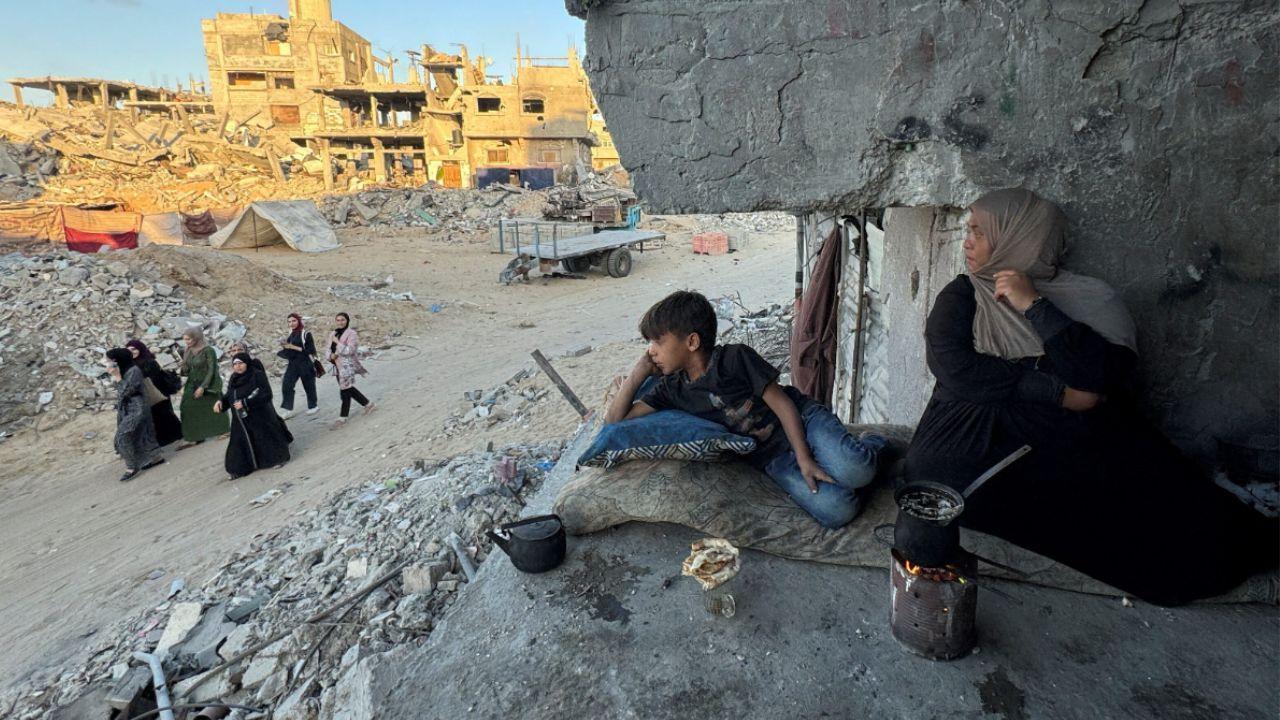
In southern Syria, the mood is one of anxiety and despair. Many residents feel caught in the middle of a conflict they do not control. Local interviews aired on Arabic television channels have shown families living in makeshift shelters and children being treated for injuries caused by flying debris.
One resident of Quneitra said, “We are not involved in any war. We just want peace and the right to live safely. Every night, we pray that the planes don’t come.”
Their voices are largely missing from diplomatic discussions, but their suffering highlights the real cost of regional power struggles.
Global Diplomacy and Regional Dialogue
Efforts are underway among regional and international diplomats to cool the tensions. Jordan, which shares a border with Syria and has been affected by refugee flows, is working closely with Egypt, the United Nations, and even Russia to encourage restraint.
There is a general understanding that a wider war in Syria would be catastrophic—not just for Syrians, but for the entire region. It would disrupt energy supplies, trade routes, and diplomatic relations at a time when the world is already dealing with economic uncertainty.
The European Union has also expressed support for de-escalation. EU foreign policy chief Josep Borrell said, “The path to stability must be through diplomacy, not missiles. We urge all actors to step back and find common ground.”
Risks of Escalation
Experts warn that if the situation is not carefully managed, it could spiral out of control. A single strike that kills Iranian officers, or a retaliatory missile that hits Israeli territory, could lead to a war nobody wants.
This is especially concerning given Hezbollah’s recent threats to open a second front if Israel continues its military activities. With Iran already emboldened by recent regional gains and closer ties with Russia and China, the geopolitical stakes are high.
A Middle East analyst at a Washington-based think tank summed it up well: “We are looking at a region sitting on a powder keg. Syria is just one spark away from lighting it.”






DAE Achieves Remarkable Growth in Q1 2026 With Record Revenue
Dubai Aerospace Enterprise announces impressive financial results for Q1 2026, reflecting a surge in

Price Increase for Sony PS5 in Southeast Asia Effective May 1
Sony announces a price increase for the PS5 across Southeast Asia starting May 1, 2026, impacting ga

Potential ‘Super El Niño’ in 2026: Understanding the Climate Risks
Could a Super El Niño emerge in 2026? Discover its implications and potential global climate impacts

Global Energy Crisis Intensifies: Markets React to Oil Supply Challenges
Markets are on edge as oil disruptions escalate, influencing prices and economic stability. Explore

Must-See Tourist Spots in London You Can't Overlook
Explore London's essential attractions, from royal landmarks to vibrant markets, ensuring an unforge

Ultimate Guide to Snagging Cheap Flights in 2026
Unlock the secrets to booking affordable flights in 2026 with insightful tips and strategies tailore




