Post by : Saif Nasser
The war in the Middle East has entered a new and dangerous phase after U.S. President Donald Trump publicly encouraged Iranian Kurdish fighters to launch attacks against Iran’s security forces. His remarks come as the conflict between Iran, the United States, and Israel continues to widen, drawing in more countries and armed groups across the region.
Speaking in recent comments reported by Reuters, Trump said he supports the idea of Kurdish forces taking action against Iran. He said that if Kurdish fighters choose to attack Iranian forces, he would be “all for it,” suggesting that such moves could weaken Tehran’s military power during the ongoing conflict.
The statement marks a significant escalation in rhetoric from Washington. It signals that the United States may be open to supporting internal opposition groups inside Iran as part of the broader strategy against the Iranian government.
The war began when U.S. and Israeli forces launched major strikes against Iranian targets. Since then, the conflict has spread across multiple countries in the Middle East, involving missile attacks, airstrikes, and naval battles. Thousands of people have already been affected by the violence, and tensions continue to rise.
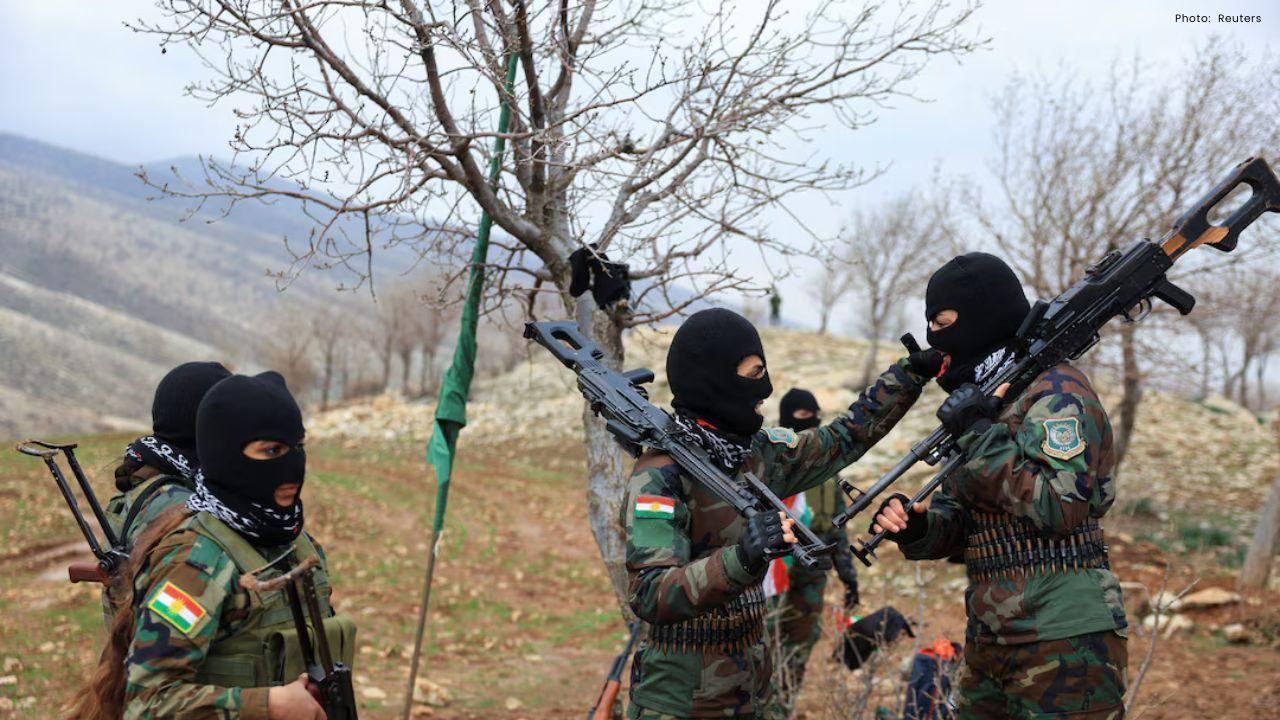
Trump’s comments about Kurdish forces came as reports emerged that Iranian Kurdish militias based in neighboring Iraq have been discussing possible military action against Iran. According to sources familiar with the discussions, some Kurdish groups have consulted with the United States about whether and how they could strike Iranian security forces in western Iran.
These Kurdish groups operate mainly near the Iran-Iraq border in the semi-autonomous Kurdish region of Iraq. Many of them have long opposed the Iranian government and have been involved in armed struggles for greater rights or autonomy.
The Kurdish fighters are believed to be preparing for possible operations aimed at weakening Iranian military positions near the border areas. If such attacks happen, they could open a new front in the already expanding war.
The Kurds are one of the largest ethnic groups in the Middle East without their own independent country. Around 30 to 40 million Kurds live across several countries, including Turkey, Iraq, Syria, and Iran. Many Kurdish communities have faced political and cultural restrictions in the countries where they live.
Because of their strong military groups and knowledge of mountainous terrain, Kurdish fighters have often played important roles in regional conflicts. In recent years, Kurdish militias have fought against ISIS and other extremist groups with support from Western countries.
However, the idea of Kurdish forces attacking Iran raises serious concerns about further instability in the region. Experts warn that encouraging armed groups inside Iran could increase violence and trigger retaliation from Tehran.
Iran has already carried out missile strikes against Kurdish positions in Iraq in recent days. Iranian officials say the Kurdish groups are separatists and have warned that any attacks on Iranian territory will be met with a strong response.
The conflict is now spreading far beyond the original battlefield. Iran has launched missile and drone attacks on several targets across the Middle East, including Israel, Gulf states, and other regional locations. Military actions have also been reported in the Indian Ocean and near major shipping routes.
This widening conflict has raised fears that the war could turn into a large regional confrontation involving many countries.
Trump has also suggested that the United States should play a role in shaping Iran’s political future. In recent remarks, he said Washington should be involved in choosing the country’s next leader to ensure long-term stability and prevent repeated conflicts.
Such statements have added to concerns that the war could move beyond military strikes and toward attempts at political change inside Iran.
Critics argue that outside interference in Iran’s leadership could make the situation even more complicated. They warn that attempts to influence internal politics in another country often lead to long-term instability.
Supporters of the U.S. strategy say weakening Iran’s government could reduce threats to regional security and limit Tehran’s military activities across the Middle East.
Meanwhile, ordinary civilians across the region continue to face the growing dangers of war. Airstrikes, missile attacks, and economic disruption have already affected millions of people.
Air travel across the Middle East has been disrupted, oil prices have risen sharply, and several countries have increased their military readiness.
The possibility of Kurdish fighters joining the war inside Iran could create another layer of conflict. If Kurdish forces begin attacking Iranian military positions, Tehran may respond with stronger operations along its borders and beyond.
Regional governments are closely watching the situation, fearing that the war could spill over into neighboring countries.
For now, diplomatic efforts to stop the fighting remain limited. Many global leaders have called for restraint, but the military confrontation continues to grow.









DAE Achieves Remarkable Growth in Q1 2026 With Record Revenue
Dubai Aerospace Enterprise announces impressive financial results for Q1 2026, reflecting a surge in

Price Increase for Sony PS5 in Southeast Asia Effective May 1
Sony announces a price increase for the PS5 across Southeast Asia starting May 1, 2026, impacting ga

Potential ‘Super El Niño’ in 2026: Understanding the Climate Risks
Could a Super El Niño emerge in 2026? Discover its implications and potential global climate impacts

Global Energy Crisis Intensifies: Markets React to Oil Supply Challenges
Markets are on edge as oil disruptions escalate, influencing prices and economic stability. Explore

Must-See Tourist Spots in London You Can't Overlook
Explore London's essential attractions, from royal landmarks to vibrant markets, ensuring an unforge

Ultimate Guide to Snagging Cheap Flights in 2026
Unlock the secrets to booking affordable flights in 2026 with insightful tips and strategies tailore




