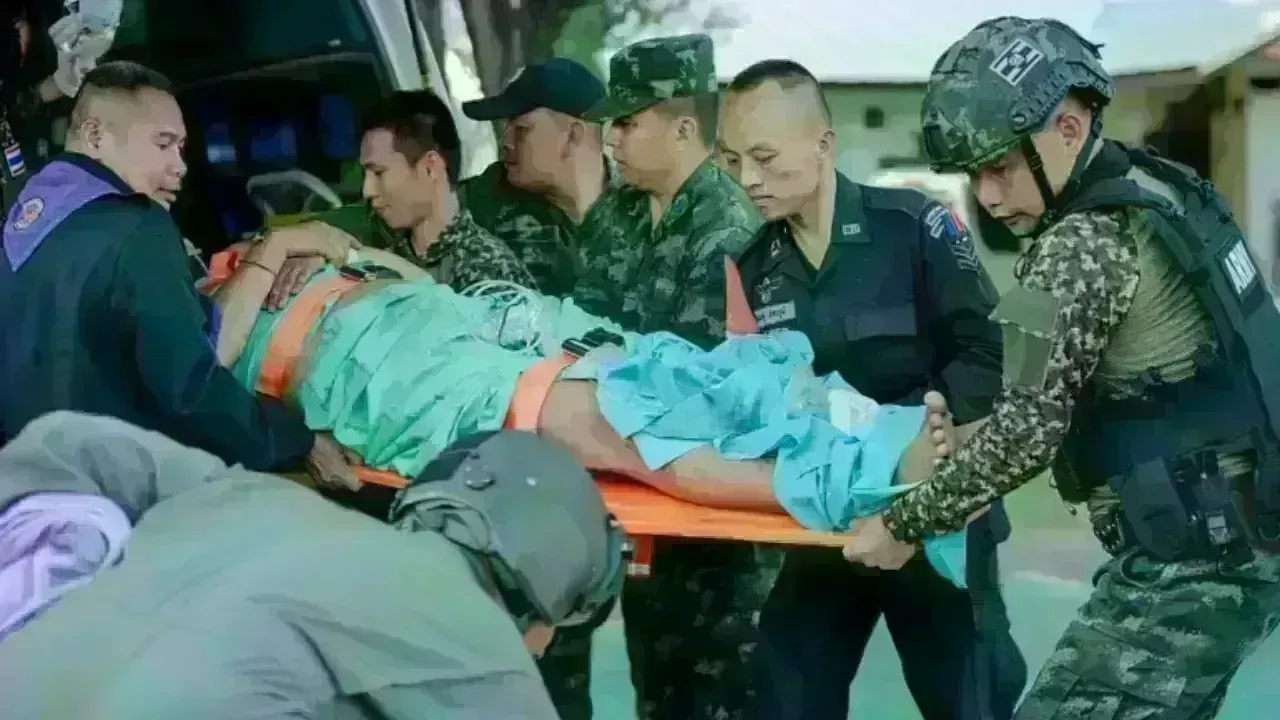
Post by : Samir Nasser
Photo: AFP
The longstanding tensions along the Thailand–Cambodia border flared up dramatically with an unexpected assault in early December 2025, disrupting a fleeting period of calm following the Kuala Lumpur Peace Accord. The recent conflict has left civilians in fear and analysts puzzled about the region's stability.
Hostilities escalated quickly, resulting in artillery exchanges, retaliatory airstrikes, troop movements, and mass evacuations, marking the most serious military clash between the two nations in over a decade.
The conflict began in the early hours when Thai forces stationed at a contentious border area came under fire, leading to injuries and the tragic death of a soldier. Military representatives from Thailand characterized this act as an unprovoked assault.
In retaliation, Thai forces executed airstrikes aimed at what they claimed were Cambodian military installations, an action that signaled a serious breach of the existing peace agreement.
On the other hand, Cambodian officials refuted these claims, arguing that their military was responding to unprovoked attacks from Thai aircraft on civilian areas.
The Kuala Lumpur Peace Accord had been hailed as a beacon of hope just two months prior, entailing pledges for de-escalation, troop withdrawals, and cooperative monitoring efforts.
But underlying tensions remained palpable. Reports of Thai military casualties due to landmines had already caused frictions and scepticism regarding the accord, leading to its partial suspension.
With the latest skirmish, analysts’ fears were confirmed: the agreement was unable to withstand historical animosities and military posturing.
Following the initial gunfire, the Thai military’s retaliatory airstrikes underscored the seriousness of the hostilities, marking a rare instance of aerial engagement in border conflicts.
Cambodia reported civilian injuries due to these strikes, including among the most vulnerable populations living close to the border. Both nations reported military losses, although exact figures remain undisclosed due to restricted access to the region.
As artillery shells rained down, border communities sprang into action, evacuating en masse. The Thai government relocated hundreds of thousands of civilians to safety, disrupting schools and businesses in the process.
Families fled with just the essentials, leaving their homes uncertain if they would ever return.
Reports from satellites and ground sources indicated a significant increase in military presence on both sides:
Mobilization of armored units
Repositioning of artillery
Reinforcement of border patrols
Strengthening defensive structures
This military buildup has raised alarms regarding the potential for further escalation in conflict.
Conflicts over the Cambodia–Thailand border are longstanding, originating from colonial-era maps established during France's oversight of Cambodia. Numerous critical areas, including territories around ancient temples and agricultural zones, continue to be hotly contested.
Both nations stake historical claims on these areas, making any military maneuver a sensitive trigger for conflict.
Control over ancient temples, many of which are recognized as UNESCO heritage sites, adds to the complexity of tensions. These sites symbolize national pride, heightening the stakes associated with any military success.
Despite numerous attempts over the decades, ceasefires have consistently failed due to:
Distrust among military ranks
Insufficient monitoring frameworks
Political pressure from both capitals
Independent actions by local military leaders
Residual landmines in contested areas
The December incidents serve as a stark reminder that without definitive border demarcation, any peace agreement remains precarious.
Thousands of families from both nations are now grappling with:
Temporary housing solutions
Lack of essential supplies
Interrupted educational opportunities
Loss of farming income
Psychological impacts from ongoing conflict
Farmers remain cut off from their land, traders face border obstructions, and children are denied schooling during an already perilous time.
Continued violence threatens to enlarge the ranks of the displaced. Humanitarian agencies are poised for:
Emergency food distributions
Medical care for affected populations
Provision of temporary housing solutions
Negotiations for cross-border aid efforts
The region remains vulnerable from earlier displacements, amplifying the risk of a new refugee crisis that local infrastructures may fail to support.
The breakdown of the peace efforts has raised alarms across neighboring states and regional organizations. The ongoing conflict poses threats to:
Stability in trade routes
Tourism sustainability
Investor confidence in the region
Security for communities living near the borders
Diplomatic channels are reportedly attempting to restore dialogue between the two governments, though tensions remain palpably high.
Both Thailand and Cambodia depend heavily on tourism, and conflicts, even if distant from tourist hotspots, can adversely impact visitor reassurance, leading to cancellations and economic downturns.
Numerous provinces in both nations are already reporting a decline in bookings as the conflict captures international media attention.
The border serves as a vital conduit for trade, aiding thousands of local businesses. Interruptions pose risks for:
Agricultural exports
Import operations
Transportation and logistics
Labour mobility across borders
Continued instability could impose significant long-term economic consequences.
Regional mediators may soon push for:
Immediate troop pull-outs from conflict zones
Joint assessments of border-related incidents
Reactivation of ceasefire monitoring mechanisms
Open lines of communication to prevent further misunderstanding
However, lasting peace relies heavily on political commitment from both parties, a factor historically lacking in peace efforts.
If retaliatory tactics persist, potential escalations could involve:
Extended air campaign operations
Widespread artillery confrontations
Involvement of more military units
Collateral damage to civilian areas
While a large-scale conflict remains unlikely, it is an eventuality that cannot be dismissed if tempers are not soothed.
True peace will depend on:
Finalizing clear border demarcations
Clearing remaining landmines
Establishing neutral oversight bodies
Diminishing military presence in sensitive sectors
Until these foundational issues are addressed, volatility will persist.
The unfolding crisis highlights how tenuous peace agreements can be in the presence of historical enmities and vaguely defined territorial lines.
The plight of civilians often remains an underreported aspect of military conflicts. Generations of individuals close to the border learn to navigate constant uncertainty and disruption.
This recent escalation serves as a critical alert for nations grappling with unresolved colonial borders. Without concerted diplomatic efforts, dormant disputes risk reigniting.
Southeast Asia has made notable strides in connectivity and economic growth. Continued conflict between Thailand and Cambodia could jeopardize not only their bilateral stability but regional prosperity at large.
Immediate priorities should include:
A swift ceasefire declaration
Protecting civilian populations
Facilitating reconstruction efforts
Transparent investigations into border incidents
Reactivating peace committees
Failure to take these essential steps could entrench a cycle of violence that perpetuates for years to come.
Disclaimer:
This article reflects recent publicly available information regarding ongoing events. Military developments can evolve quickly; information may change as reliable details become accessible.








Anticipated Dates for UAE Eid Al Adha 2026 Unveiled by Astronomical Experts
Experts predict Eid Al Adha 2026 in the UAE to start on May 27, prompting early holiday planning amo

DAE Achieves Remarkable Growth in Q1 2026 With Record Revenue
Dubai Aerospace Enterprise announces impressive financial results for Q1 2026, reflecting a surge in

Price Increase for Sony PS5 in Southeast Asia Effective May 1
Sony announces a price increase for the PS5 across Southeast Asia starting May 1, 2026, impacting ga

Potential ‘Super El Niño’ in 2026: Understanding the Climate Risks
Could a Super El Niño emerge in 2026? Discover its implications and potential global climate impacts

Global Energy Crisis Intensifies: Markets React to Oil Supply Challenges
Markets are on edge as oil disruptions escalate, influencing prices and economic stability. Explore

Must-See Tourist Spots in London You Can't Overlook
Explore London's essential attractions, from royal landmarks to vibrant markets, ensuring an unforge




