Post by : Priya
Photo:AFP
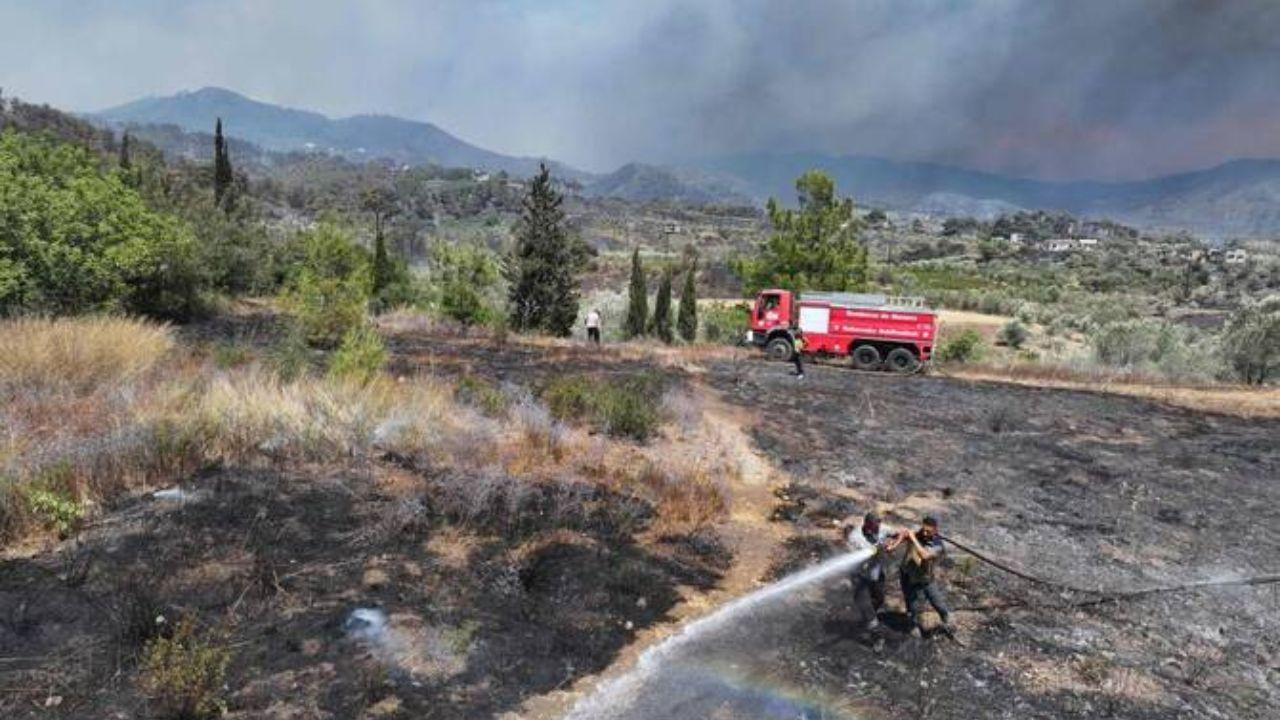
Wildfires have been burning across parts of Syria for five straight days, creating a disaster that continues to grow worse with each passing hour. The fires, which began in the countryside of western and central Syria, have already destroyed thousands of acres of forest, farmland, and homes. What started as isolated fires has now turned into a national crisis, as heavy winds and dangerous war debris make efforts to control the situation nearly impossible.
The flames have swept through provinces like Latakia, Homs, Hama, and parts of the Idlib countryside, where the terrain is dry, mountainous, and full of trees. These regions have seen multiple fires over the past few summers, but this year’s blaze has reached an intensity not witnessed in over a decade.
Experts say that strong seasonal winds, combined with hot summer temperatures, are helping the flames spread rapidly. In addition, the presence of unexploded war remnants such as landmines, shells, and hidden explosives left over from years of civil war has made firefighting efforts incredibly dangerous.
Fires Out of Control
According to local reports, the wildfires began earlier this week, likely due to a combination of human activity and natural causes. In some areas, people were burning dry branches or clearing farmland, unaware that high winds would cause the flames to escape control. In others, extreme heat alone may have sparked the fires.
“We are seeing massive walls of flame that stretch for kilometers,” said a local farmer in rural Hama, who lost his land. “They move fast, and we cannot fight them. Everything burns in minutes — the trees, the houses, even the animals.”
The Syrian Civil Defense, often known as the White Helmets, has been working day and night to rescue people, clear roads, and put out fires. But their work is made more difficult by the leftover weapons and bombs that are scattered across forests and rural lands.
In several areas, teams have had to pull back after hearing explosions caused by heat-triggered devices. One firefighter was reportedly injured in Latakia province after stepping on a hidden explosive while trying to clear dry brush.
“Each step we take in the forests is a risk,” said a volunteer firefighter from Homs. “This is not just a wildfire. It’s a war zone all over again.”
Forests and Farmland in Ashes
The destruction to Syria’s natural landscape is massive. Forests that once covered the hills of Latakia and Hama are now blackened and dead. Farmers in Homs have lost thousands of olive and citrus trees — crops that take years to grow and are essential to their income.
Satellite images show entire mountain slopes turned to ash. Thick smoke has covered nearby cities and towns, making it hard to breathe and cutting visibility on roads. The health effects of smoke exposure are expected to rise, especially among the elderly and children.
The environmental loss is heartbreaking. Syria's forests, already damaged by illegal logging, climate change, and overuse, may take decades to recover from this year’s wildfires. These forests are home to various wildlife species, many of which have likely died or fled.
“We lost more than just trees,” said an environmental activist in Latakia. “We lost homes for birds, animals, and a way of life for people who lived in harmony with the forest. This is a disaster on every level.”
Villages Burn and Families Flee
As flames crept closer to villages, thousands of families had to leave their homes with little warning. Many took nothing but the clothes they were wearing. Videos on social media show children crying, mothers carrying bags of food, and elderly men leaning on walking sticks as they flee burning neighborhoods.
Entire communities in western Syria are now living outdoors — in schools, mosques, or even under trees. Humanitarian aid has been slow to arrive due to damaged roads and the dangerous conditions. Local groups and volunteers are providing basic needs like water, bread, and medicine, but more help is urgently needed.
In one of the hardest-hit towns in Homs province, locals said they had less than 30 minutes to evacuate. “The smoke was so thick, we couldn’t see,” said a mother of three. “We just ran. We left everything — our home, our photos, our lives.”
No Strong Emergency Response
One of the reasons the fires have spread so widely is Syria’s lack of firefighting capacity. After more than a decade of war, the country’s emergency services are under-equipped and understaffed. Fire trucks are outdated, water tanks are limited, and many regions do not have trained firefighters.
In some areas, local residents are trying to put out fires with buckets of water or digging trenches by hand. But this is no match for flames pushed by winds and fed by dry brush.
A resident of Latakia said, “We called for help, but no one came. We had to fight the fire ourselves. We lost our house, our land, and we nearly lost our lives.”
The government has deployed a few helicopters to drop water on the fires, but they are not enough. Reports from local media suggest that some firefighting aircraft were grounded due to lack of fuel or maintenance issues. The slow response has sparked anger among many citizens, who feel abandoned in their time of need.
International Concern and Political Barriers
The wildfires in Syria have attracted attention from international aid organizations and environmental groups. The United Nations has expressed concern and said it is ready to help, but delivering aid is not easy. Syria’s political situation and ongoing sanctions have made it difficult for international agencies to operate freely.
Many aid convoys have been blocked or delayed due to checkpoints, security concerns, or lack of official approval. Humanitarian workers say that even when they are allowed to enter fire-hit areas, the risk from unexploded bombs and mines limits what they can do.
“There’s a lot of red tape,” said a relief worker based in Lebanon. “We want to help, but the system makes it nearly impossible to move quickly.”
Some Syrians are calling on neighboring countries like Lebanon, Iraq, and Jordan to send firefighting support. So far, there has been no official response.
Fires Could Burn for Days More
Weather forecasts show no sign of rain in the coming days. In fact, temperatures are expected to rise in many parts of Syria, which could make the fires even worse. Winds are also predicted to stay strong, which means new fires could easily start or spread.
Environmental experts warn that unless major action is taken now, the wildfires could burn for several more days or even weeks. The long-term impact on the environment, agriculture, and people’s health could be devastating.
“Time is running out,” said a forest official in Hama. “We must act now to save what’s left.”
Long Road to Recovery
Even after the fires stop, the path to recovery will be long and painful. Burned forests will need decades to regrow. Farmers will have to replant trees, rebuild fences, and restore irrigation systems. Families who lost their homes will need shelter, food, and support to start over.
Rebuilding Syria’s emergency response system will also take time. Experts say that the country needs better planning for disasters, more trained personnel, and new equipment to handle future crises.
In the meantime, thousands of Syrians remain displaced, sleeping outdoors, waiting for help that has yet to arrive.







DAE Achieves Remarkable Growth in Q1 2026 With Record Revenue
Dubai Aerospace Enterprise announces impressive financial results for Q1 2026, reflecting a surge in

Price Increase for Sony PS5 in Southeast Asia Effective May 1
Sony announces a price increase for the PS5 across Southeast Asia starting May 1, 2026, impacting ga

Potential ‘Super El Niño’ in 2026: Understanding the Climate Risks
Could a Super El Niño emerge in 2026? Discover its implications and potential global climate impacts

Global Energy Crisis Intensifies: Markets React to Oil Supply Challenges
Markets are on edge as oil disruptions escalate, influencing prices and economic stability. Explore

Must-See Tourist Spots in London You Can't Overlook
Explore London's essential attractions, from royal landmarks to vibrant markets, ensuring an unforge

Ultimate Guide to Snagging Cheap Flights in 2026
Unlock the secrets to booking affordable flights in 2026 with insightful tips and strategies tailore




