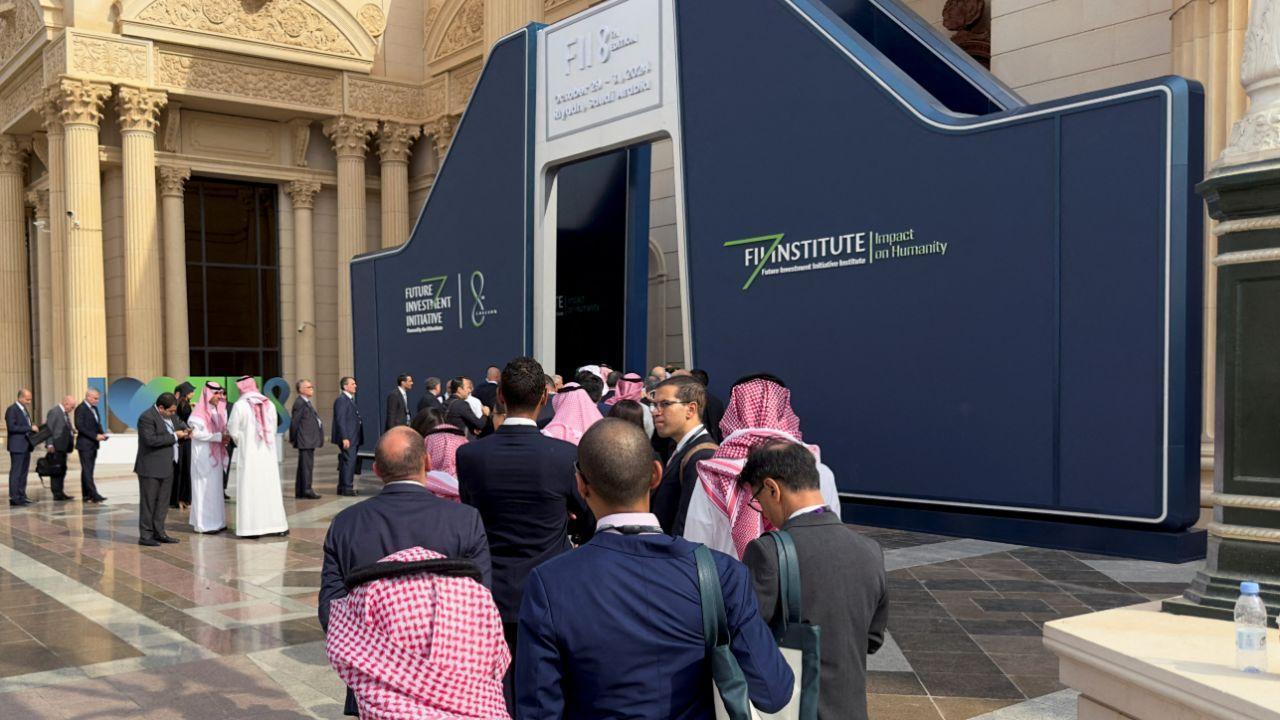
Post by : Priya
Photo:Reuters
Saudi Arabia, a country long known for its vast oil wealth, is now taking a major step to reshape its economy for a future beyond oil. With a massive $100 billion industrial expansion plan, the Kingdom aims to boost its local manufacturing capacity, create thousands of jobs, and build a more diverse and self-reliant economy. This move is part of the country's wider Vision 2030 initiative, which seeks to prepare Saudi Arabia for a post-oil future and position it as a global economic powerhouse.
A New Industrial Chapter in Saudi Arabia’s Economic Story
For decades, Saudi Arabia’s economy has depended heavily on oil exports. Though this has made the country wealthy, it has also left it vulnerable to oil price shocks and global energy shifts. Recognizing this risk, the Saudi government has introduced several reforms under its Vision 2030 strategy, designed to reduce oil dependency and promote new sectors.
The announcement of the $100 billion industrial plan marks a turning point in this strategy. Led by Bandar Alkhorayef, the Kingdom’s Minister of Industry and Mineral Resources, the plan aims to launch over 3,800 new industrial projects across various sectors. These include food processing, pharmaceuticals, chemicals, metal production, and machinery — all areas with strong domestic demand and export potential.
“This is not just about more factories. It’s about changing the way our economy works,” said Alkhorayef during the launch event.
The National Industrial Strategy: Key Targets
The industrial expansion is part of the broader National Industrial Strategy, which outlines several ambitious goals for the coming decade. At the center of this strategy is a desire to make Saudi Arabia a leading global player in manufacturing.
Top Objectives Include:
Tripling the Number of Factories
Increasing from 11,000 factories today to 36,000 by 2035, covering a wide range of industries.
Increasing Local Content and Production
Encouraging Saudi-based production and reducing reliance on imported goods.
Growing Industrial Exports
Expanding the country’s presence in global trade markets by boosting the export of Saudi-made products.
Creating Thousands of Jobs
Offering new job opportunities in both skilled and semi-skilled sectors, especially for Saudi youth.
Attracting Private and Foreign Investment
Making it easier and more attractive for businesses to set up manufacturing operations in the Kingdom.
Sectors Targeted for Growth
The Kingdom has identified key sectors that can help drive industrial growth and diversification. These industries have been selected for their importance to national development and their potential to create value.
Food and Agriculture
Saudi Arabia seeks to improve food security by investing in food production and processing industries. This includes setting up modern food factories that meet global standards.
Pharmaceuticals
To reduce dependence on imported medicine and boost public health, the Kingdom is investing heavily in the pharmaceutical sector. Local drug manufacturing is expected to expand rapidly under this plan.
Chemicals and Petrochemicals
Saudi Arabia already has a strong presence in chemicals, but it aims to move beyond raw material exports. The new plan promotes value-added chemical production, including plastic products, paints, and industrial gases.
Metal Fabrication and Machinery
Investments will support the local production of equipment and tools needed for building, mining, and oil and gas operations.
Job Creation and Workforce Development
One of the key promises of this plan is job creation. Saudi Arabia has a young population, and finding sustainable jobs for them is a top priority. The new industrial projects are expected to create tens of thousands of jobs across the Kingdom.
The government is also investing in technical education and skills training to prepare citizens for careers in manufacturing and industrial management. Training programs will be aligned with the needs of modern industries, focusing on hands-on skills, machinery operation, engineering, and safety standards.
Moreover, partnerships between the government, local businesses, and international institutions are being developed to promote apprenticeship programs, support female participation in the workforce, and create long-term career paths.
Support for Small and Medium Enterprises (SMEs)
The Saudi government is offering targeted support to small and medium-sized businesses, which are seen as critical to industrial success. SMEs will receive:
Access to low-cost industrial land
Financial assistance and subsidies
Help with product development and innovation
Easier access to export markets
Encouraging SMEs to enter the manufacturing space will increase competition, improve quality, and offer more choice to consumers.
International Partnerships and Foreign Investment
A major part of the plan involves attracting international investors. Saudi Arabia is positioning itself as an investment-friendly destination for foreign companies looking to enter the Middle East and North Africa (MENA) markets.
The Kingdom is improving regulatory frameworks, offering tax benefits, and developing large industrial zones with modern infrastructure. One such zone is the King Salman Energy Park (SPARK), which is already drawing interest from global companies in energy and manufacturing.
These zones offer ready-to-build plots, warehouse facilities, and connections to seaports, railways, and airports — making them ideal for businesses seeking regional distribution hubs.
Reducing Reliance on Imports
Currently, Saudi Arabia imports many of the goods it uses daily. From food to cars to electronics, a large portion of consumer and industrial goods are brought in from abroad. The new plan aims to replace many of these imports with locally made alternatives.
Producing more goods within the Kingdom will help keep more money inside the economy and reduce exposure to global supply chain disruptions — something the world has seen during recent crises like the COVID-19 pandemic and the Red Sea shipping crisis.
Environmental and Energy Efficiency Goals
Though industrial growth often raises concerns about pollution, Saudi Arabia has committed to making this expansion environmentally responsible. The plan includes:
Promoting clean energy in factories
Encouraging the use of recycled materials
Applying modern waste management systems
Enforcing strict environmental regulations
The government aims to balance industrial growth with its commitments to sustainability and climate protection under the Saudi Green Initiative.
Infrastructure: Building for the Future
To support this massive industrial drive, Saudi Arabia is making large investments in transport and logistics infrastructure. Roads, ports, industrial cities, and digital systems are being expanded to ensure efficient production and shipping of goods.
These developments will not only support factories but also make it easier for businesses and people to connect across the country. Infrastructure development is seen as a foundation for long-term economic strength.









Achieve Radiant Skin with This Simple Rice Flour Treatment
Transform your skincare routine! Discover how a rice flour mix can restore your skin's glow without

Meta Unveils Subscription Plans for Instagram, Facebook, and WhatsApp
Meta introduces new subscription plans for users of Instagram, Facebook, and WhatsApp, featuring enh

Suvarna Joy on Education Leadership, Resilience, and Building Purpose Through Adversity in the UAE
Suvarna Joy shares her journey of education leadership, motherhood, faith, and resilience within the

Anticipated Dates for UAE Eid Al Adha 2026 Unveiled by Astronomical Experts
Experts predict Eid Al Adha 2026 in the UAE to start on May 27, prompting early holiday planning amo

DAE Achieves Remarkable Growth in Q1 2026 With Record Revenue
Dubai Aerospace Enterprise announces impressive financial results for Q1 2026, reflecting a surge in

Price Increase for Sony PS5 in Southeast Asia Effective May 1
Sony announces a price increase for the PS5 across Southeast Asia starting May 1, 2026, impacting ga




