Post by : Shakul
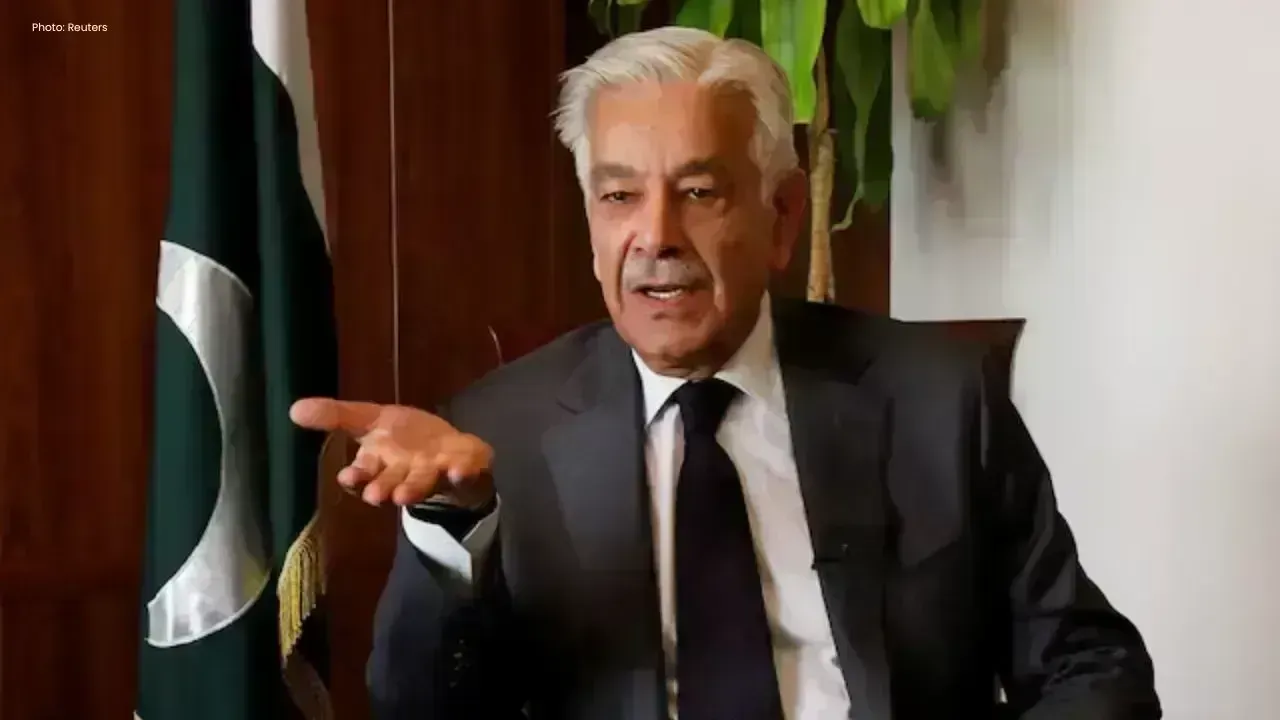
Khawaja Asif, the Defence Minister of Pakistan, has made it clear that he does not support the Abraham Accords, underscoring Islamabad's ongoing hesitation to establish diplomatic ties with Israel. His statements emerged during renewed global conversations about Middle Eastern diplomacy and current negotiations between Iran and the United States.
In a media briefing in Islamabad, Asif articulated his belief that Pakistan should not engage in any accord that contradicts its "fundamental ideologies." His remarks received considerable attention from political and diplomatic circles, particularly amid escalating international expectations linked to regional peace initiatives and strategic partnerships in the Middle East.
These comments come on the heels of suggestions from Donald Trump, advocating for countries involved in negotiations regarding Iran to contemplate participating in the Abraham Accords. These agreements were initially unveiled during Trump's previous administration with the aim of normalizing diplomatic, economic, and security relations between Israel and several Arab nations.
Historically, Pakistan has asserted that any acknowledgement of Israel must be paired with a fair resolution of the Palestinian issue and the establishment of a sovereign Palestinian state. Analysts believe Khawaja Asif's statements symbolize Islamabad's persistent diplomatic stance and the domestic political sensitivities surrounding relations with Israel.
The Abraham Accords were first inked in 2020, with nations such as the United Arab Emirates, Bahrain, Morocco, and Sudan agreeing to recognize Israel under U.S.-facilitated frameworks. Since then, Washington has endeavored to draw additional Muslim-majority nations into this initiative.
Asif's declarations emerge during a phase when Pakistan is strategically balancing its diplomatic ties throughout the Middle East. The nation nurtures robust political and economic connections with Gulf countries while simultaneously advocating for Palestinian rights on global platforms.
Experts suggest that Pakistan's internal political landscape renders any formal rapprochement with Israel a touchy subject. Public sentiment in Pakistan has historically leaned toward supporting the Palestinian cause, with political factions generally opposing the recognition of Israel without a comprehensive peace framework in the region.
The defence minister's comments are poised to impact ongoing regional diplomatic dialogues that involve Iran, Gulf nations, and the United States. While Washington persists in promoting increased regional cooperation through the Abraham Accords, Islamabad's latest stance signifies that it is unlikely to modify its long-held foreign policy in the foreseeable future.









Suvarna Joy on Education Leadership, Resilience, and Building Purpose Through Adversity in the UAE
Suvarna Joy shares her journey of education leadership, motherhood, faith, and resilience within the

Anticipated Dates for UAE Eid Al Adha 2026 Unveiled by Astronomical Experts
Experts predict Eid Al Adha 2026 in the UAE to start on May 27, prompting early holiday planning amo

DAE Achieves Remarkable Growth in Q1 2026 With Record Revenue
Dubai Aerospace Enterprise announces impressive financial results for Q1 2026, reflecting a surge in

Price Increase for Sony PS5 in Southeast Asia Effective May 1
Sony announces a price increase for the PS5 across Southeast Asia starting May 1, 2026, impacting ga

Potential ‘Super El Niño’ in 2026: Understanding the Climate Risks
Could a Super El Niño emerge in 2026? Discover its implications and potential global climate impacts

Global Energy Crisis Intensifies: Markets React to Oil Supply Challenges
Markets are on edge as oil disruptions escalate, influencing prices and economic stability. Explore




