Post by : Naveen Mittal
For decades, computers have mimicked logic, not life. But now, scientists are looking to the human brain — the most efficient processor ever created — for inspiration.
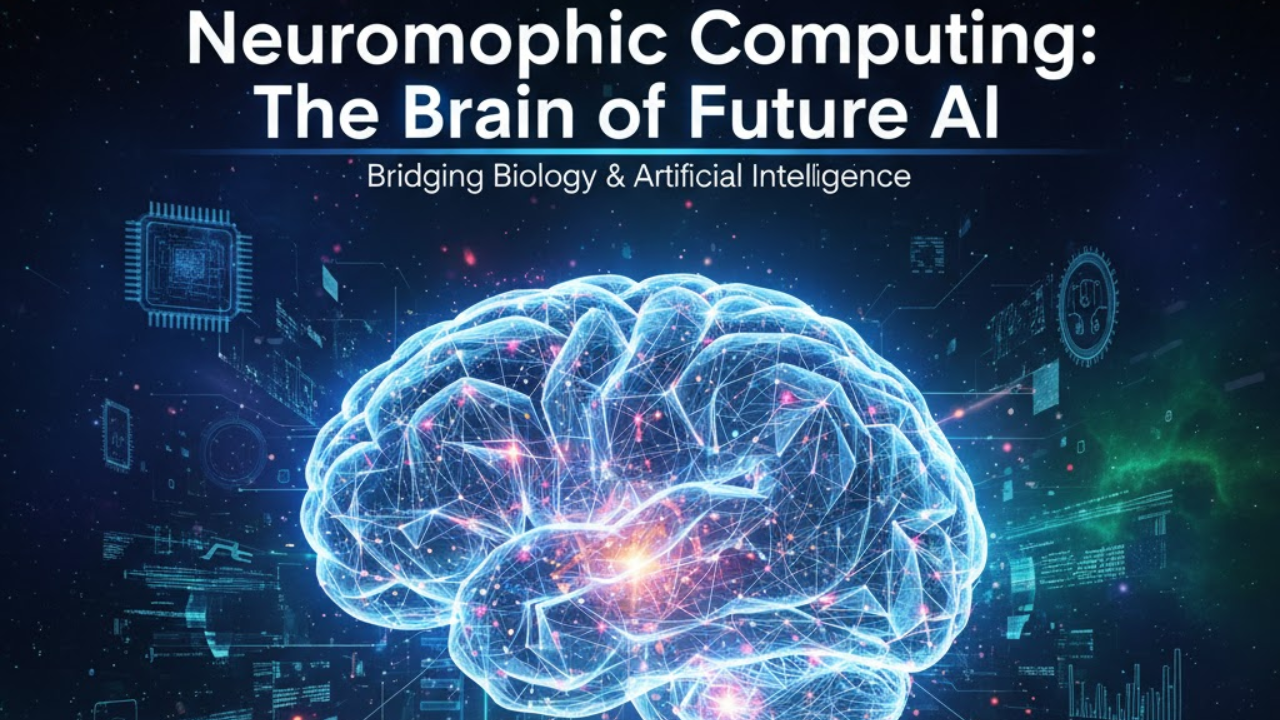
The result is neuromorphic computing, a groundbreaking approach that blurs the line between biology and technology. These brain-inspired chips are designed to think, learn, and adapt the way neurons do, marking the beginning of a new era in artificial intelligence hardware.
Traditional computers follow a strict set of instructions using binary logic — a series of 0s and 1s. But the brain works very differently. It processes information through neurons and synapses, firing electrical signals in complex, interconnected networks.
Neuromorphic chips replicate this structure using spiking neural networks (SNNs) — circuits that communicate with each other through electrical impulses, just like real brain cells.
Unlike conventional CPUs or GPUs that process data sequentially, neuromorphic processors handle data in a parallel, event-driven manner. That makes them dramatically faster and more energy-efficient for AI tasks such as vision, speech, and pattern recognition.
Neuromorphic computing is based on three biological principles:
Neurons (Processing Units): Each “neuron” in the chip represents a node capable of firing or staying silent depending on input.
Synapses (Connections): Signals travel between neurons through artificial synapses that adjust their strength — mimicking how learning occurs.
Plasticity (Learning Mechanism): The chip can rewire itself over time, strengthening some pathways and weakening others, just like our brains do during learning.
This dynamic adaptability allows neuromorphic chips to perform real-time learning without needing massive datasets or external training like traditional AI models.
While still emerging, neuromorphic technology is already finding its way into AI, robotics, and IoT devices that require instant decision-making with minimal power consumption.
Edge AI Devices: Neuromorphic chips allow smart cameras and sensors to process visual or audio data directly on the device — no cloud required.
Autonomous Vehicles: They can react faster to environmental changes, reducing latency in self-driving systems.
Robotics: Robots powered by neuromorphic processors learn through experience, improving adaptability in unstructured environments.
Healthcare: Medical devices could use these chips for real-time brain activity analysis and prosthetic control.
Consumer Tech: Imagine smartphones that can perceive, learn, and respond as intuitively as a human assistant.
Several tech giants and research institutions are racing to develop next-generation neuromorphic processors:
IBM TrueNorth: One of the first large-scale neuromorphic chips, capable of simulating over 1 million neurons while consuming minimal power.
Intel Loihi 2: Built on advanced spiking neural network architecture, it’s designed for on-device learning and low-latency inference.
BrainChip’s Akida: A commercial neuromorphic processor optimized for edge AI, already being integrated into smart cameras and industrial systems.
Samsung & SynSense: Working on hybrid AI chips that merge classical and neuromorphic computing for IoT and robotics applications.
Together, these innovations are paving the way for AI systems that think more like humans than machines.
As AI models grow larger and more complex, their energy consumption has exploded.
Training one large-scale neural network can emit as much carbon as five cars over their entire lifetime.
Neuromorphic processors address this crisis by using up to 1,000 times less power while performing similar computations.
This efficiency is game-changing for edge computing, where devices must think fast without relying on the cloud. For example, a drone equipped with a neuromorphic processor could navigate autonomously for hours using only minimal battery power.
According to MarketsandMarkets, the neuromorphic computing market is projected to exceed $9 billion by 2032, growing at a CAGR of more than 30%.
Governments and corporations in the US, China, Japan, and South Korea are heavily investing in neuromorphic research as part of broader AI hardware development programs.
Neuromorphic computing goes beyond simply performing tasks — it’s about understanding context, predicting outcomes, and learning through experience.
This means the next generation of AI won’t just analyze data; it will reason, adapt, and evolve. Imagine an AI that not only recognizes faces but also remembers emotional expressions or predicts intent based on movement — capabilities that traditional deep learning still struggles to replicate.
In essence, neuromorphic chips are taking AI from “smart” to “aware.”
Neuromorphic computing represents a shift from brute-force data processing to biologically inspired intelligence.
It’s not about replacing the human brain but learning from it — building machines that can think creatively, learn efficiently, and operate sustainably.
As these chips move from labs to real-world applications, they could redefine everything from how AI interacts with humans to how devices consume power.
The age of silicon logic is giving way to something new — an era of synthetic neurons, artificial synapses, and truly intelligent computing.










DAE Achieves Remarkable Growth in Q1 2026 With Record Revenue
Dubai Aerospace Enterprise announces impressive financial results for Q1 2026, reflecting a surge in

Price Increase for Sony PS5 in Southeast Asia Effective May 1
Sony announces a price increase for the PS5 across Southeast Asia starting May 1, 2026, impacting ga

Potential ‘Super El Niño’ in 2026: Understanding the Climate Risks
Could a Super El Niño emerge in 2026? Discover its implications and potential global climate impacts

Global Energy Crisis Intensifies: Markets React to Oil Supply Challenges
Markets are on edge as oil disruptions escalate, influencing prices and economic stability. Explore

Must-See Tourist Spots in London You Can't Overlook
Explore London's essential attractions, from royal landmarks to vibrant markets, ensuring an unforge

Ultimate Guide to Snagging Cheap Flights in 2026
Unlock the secrets to booking affordable flights in 2026 with insightful tips and strategies tailore




