Post by : Sami Jeet
First-time visitors and new residents often find Dubai’s public transport system puzzling. Contrary to common belief, it's not just a car-centric or taxi-reliant city. Instead, Dubai boasts one of the most efficient and technologically advanced public transportation systems in the Middle East, incorporating metro trains, trams, buses, water transport, and smart card technology, all designed for accessibility and efficiency.
This guide aims to clarify how public transport operates in Dubai, the fare structure, actual ticket prices, and practical ways for both visitors and locals to use the system without confusion.
The Roads and Transport Authority (RTA) oversees all public transport in Dubai, handling details like planning, pricing, safety, and service integration. This management ensures uniformity across various transport modes.
The system emphasizes cashless travel, a zone-based pricing model, and connectivity options. A single card can be used across metro, buses, trams, and water transport.
The city is segmented into fare zones, determining ticket prices based on the number of zones traversed rather than distance traveled.
Zone 1 includes central areas like Bur Dubai and Deira.
Zone 2 covers Al Barsha and neighboring areas.
Zone 3 comprises outer regions like Jebel Ali and Expo City.
Fares are lowest when traveling within a single zone, with slight increases for crossing multiple zones.
The Nol Card serves as the cornerstone of Dubai's transport network.
Red Ticket: Ideal for tourists and short-term visitors.
Silver Nol Card: The most popular choice for residents.
Gold Nol Card: Similar to the Silver but allows access to Gold Class cabins.
Blue Nol Card: Personalized for students, seniors, and people with special needs.
The Nol Card can be used across the metro, buses, trams, and water transport.
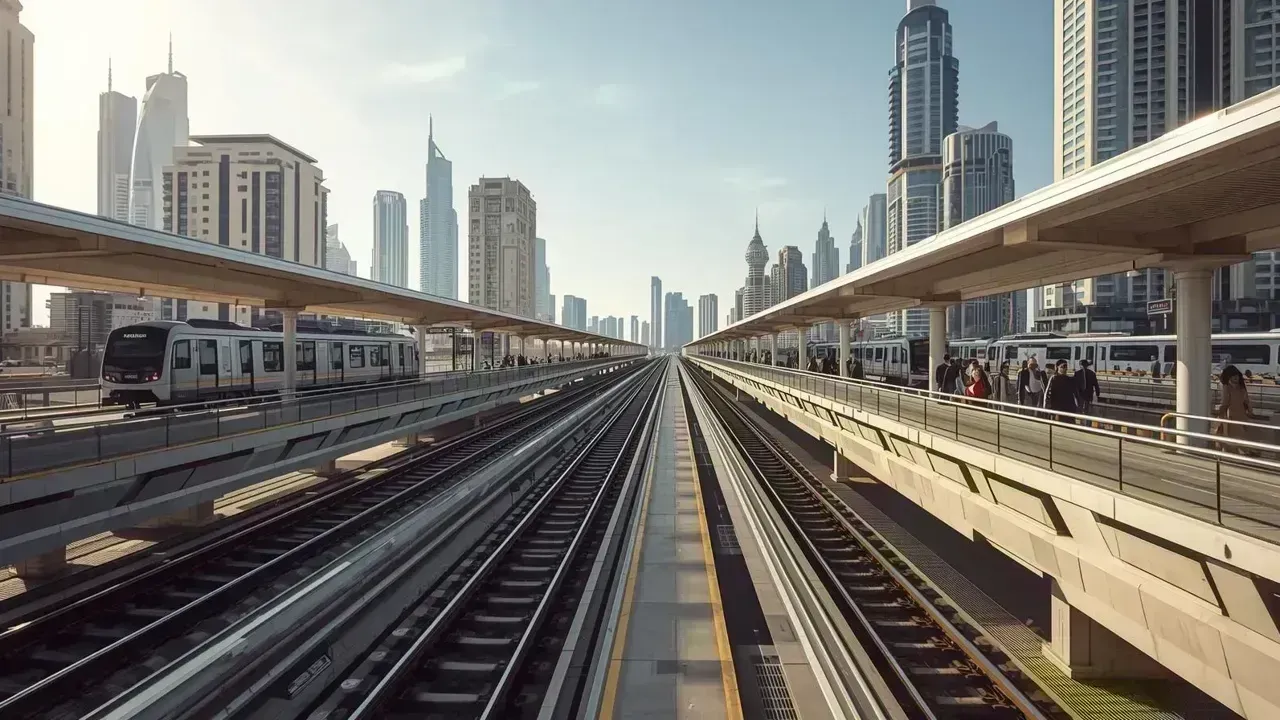
The Dubai Metro is the public transport system's backbone. It's fully automated, air-conditioned, and renowned for its punctuality.
Red Line: Extends from Centrepoint (near DXB Airport) to Expo City.
Green Line: Links Deira with Bur Dubai.
The Red Line is particularly favored as it connects key airports, shopping centers, business hubs, and tourist attractions.
Stations are well-indicated, multilingual, and designed for maximum usability, featuring elevators, escalators, tactile paths, and clear signage for accessibility.
Metro fares are based on zones and card types.
For a Silver Nol Card, typical prices are:
Within 1 zone: approximately AED 3.
Across 2 adjacent zones: around AED 5.
Across more than 2 zones: about AED 7.5.
Gold Class fares are approximately double those of Silver.
Various passes are available, offering savings for frequent travelers.
Gold Class offers:
More spacious seating.
Quieter cabins.
Priority seating.
Silver Class is an economical choice for everyday commuters.
Using Gold Class with a Silver card can lead to penalties, so ensure card types match cabin class.
Dubai’s bus network effectively complements the metro system. Buses are modern, air-conditioned, and adhere to strict schedules.
Local buses.
Feeder buses connecting metro stations.
Intercity buses to Sharjah, Abu Dhabi, and other emirates.
Bus stops are often sheltered, air-conditioned in select areas, and feature digital route displays.
Bus fares operate on a zone basis and are automatically deducted from the Nol Card.
Typically, bus prices align with metro rates, making them an economical option for daily travel.
Feeder buses to metro stops may be included in the same journey if used within a designated timeframe.
The Dubai Tram primarily services areas like Dubai Marina and JBR.
Links metro stations to residential and beachfront locales.
Reduces reliance on taxis during peak traffic.
Fully integrated into the Nol Card system.
Tram fares typically mirror those for single-zone metro travel.
Dubai additionally features water-based public transport, offering a utility mixed with picturesque views.
Water Bus: Affordable and operates on specific routes.
Dubai Ferry: Longer routes with fantastic city views.
Abra: Traditional wooden boats, particularly around Deira and Bur Dubai.
A classic Abra ride across Dubai Creek remains one of the city's most budget-friendly transport options.
Traditional Abra fares generally range from AED 1 to AED 2.
Water buses and ferries vary in price based on route and service level.
Many locations allow water transport fees to be paid using the Nol Card.
Dubai provides daily, weekly, and monthly passes for those utilizing public transport frequently.
Unlimited travel within select zones.
Lower per-trip costs.
Highly suitable for daily commuters.
Monthly passes are especially beneficial for residents who often use metro and bus services.
Dubai maintains stable pricing without surge charges for public transport, though:
Peak times generally align with morning and evening office commutes.
Trains can get crowded during peak hours.
Prices remain constant at all times, aiding in budget planning.
Dubai has set strict transport regulations to maintain order.
Common violations resulting in fines include:
Traveling without adequate card balance.
Using a Silver card in Gold Class.
Eating or drinking on the metro.
Crossing designated safety lines.
Fines are digitally enforced, deducted via official channels.
Public transport works in conjunction with taxi services.
Taxis are available at metro station ranks.
Ride-hailing applications are active nearby stations.
This setup allows effortless last-mile connectivity without needing personal vehicles.
Tourists gain immense advantages from Dubai’s transport system:
Airport access via metro.
Simple routes to landmarks.
Cost-effective travel relative to taxi prices.
Red Tickets or Silver Nol Cards generally suffice for short visits.
Public transport significantly lessens:
Fuel expenditures.
Parking challenges.
Traffic experiences.
Numerous professionals fully rely on metro and buses for regular commuting.
Dubai's public transport is recognized for:
Immaculate cleanliness standards.
CCTV surveillance throughout facilities.
Dedicated cabins aimed at women and children.
Security personnel and emergency response systems are accessible across stations and vehicles.
The RTA provides applications for:
Route planning tools.
Fare estimations.
Card balance inquiries.
Service updates.
Digital services help to alleviate uncertainties and enhance travel planning.
Public transport contributes to Dubai’s sustainability ambitions, which include:
Cutting carbon emissions.
Mitigating traffic congestion.
Implementing energy-efficient systems.
Opting for public transport endorses long-term urban planning.
It is neither slow nor outdated.
It is not pricier than taxis.
It is ideal for everyday use, not solely for tourists.
Grasping the system can revolutionize one's experience in the city.
Dubai's public transport network is structured, budget-friendly, and dependable. Once you grasp the zoning system, Nol cards, and essential regulations, traveling becomes intuitive and predictable. Whether you’re visiting, new to the city, or a long-standing professional, this system is engineered to enhance your mobility while saving time and money.
Public transport in Dubai isn't merely an alternative—it's a smart approach to urban mobility.
This content is meant for general informational use only. Transport routes, prices, regulations, and services are subject to change based on RTA policies and operations. Readers should consult official RTA resources or station information for the most current and accurate details prior to travel.








DAE Achieves Remarkable Growth in Q1 2026 With Record Revenue
Dubai Aerospace Enterprise announces impressive financial results for Q1 2026, reflecting a surge in

Price Increase for Sony PS5 in Southeast Asia Effective May 1
Sony announces a price increase for the PS5 across Southeast Asia starting May 1, 2026, impacting ga

Potential ‘Super El Niño’ in 2026: Understanding the Climate Risks
Could a Super El Niño emerge in 2026? Discover its implications and potential global climate impacts

Global Energy Crisis Intensifies: Markets React to Oil Supply Challenges
Markets are on edge as oil disruptions escalate, influencing prices and economic stability. Explore

Must-See Tourist Spots in London You Can't Overlook
Explore London's essential attractions, from royal landmarks to vibrant markets, ensuring an unforge

Ultimate Guide to Snagging Cheap Flights in 2026
Unlock the secrets to booking affordable flights in 2026 with insightful tips and strategies tailore




