Post by : Raina Nasser
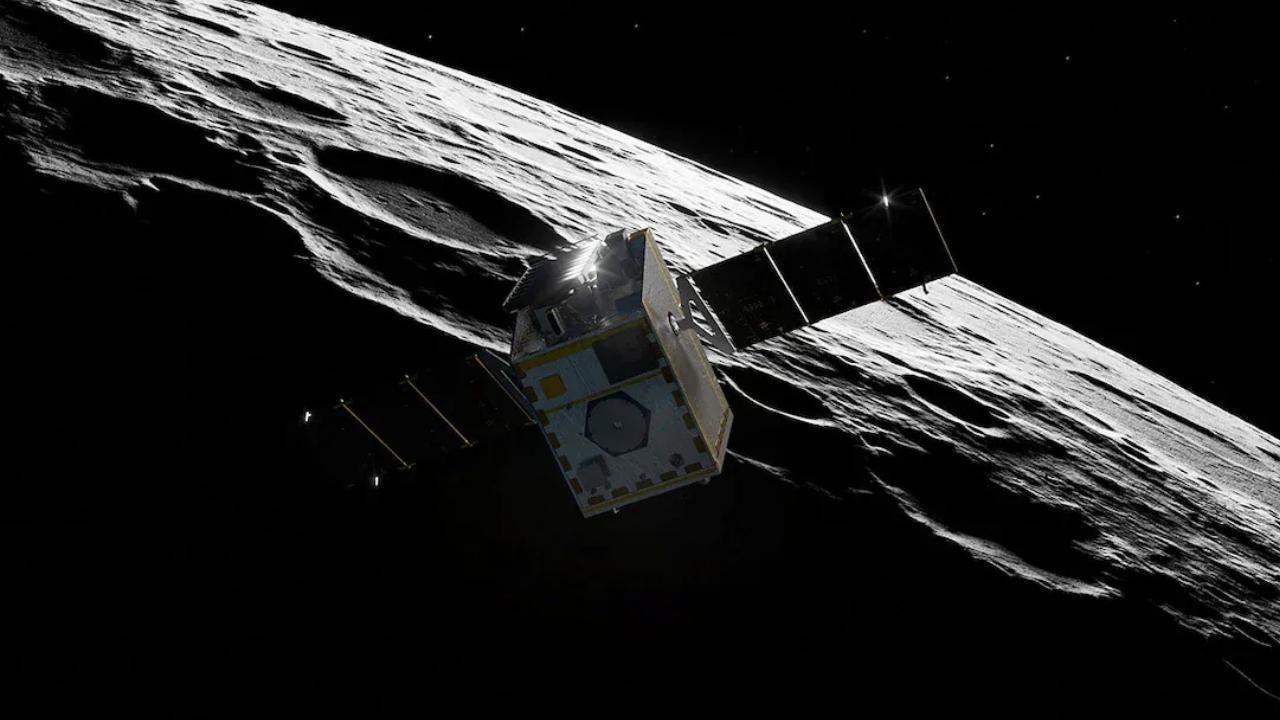
NASA is getting ready for the launch of the Interstellar Mapping and Acceleration Probe (IMAP), a new space mission designed to study the flow of particles from the sun and beyond our solar system. The IMAP mission will head towards Lagrange Point 1, a special spot in space where the gravitational forces of the Earth and Sun balance, allowing the spacecraft to remain stable and continuously observe space weather conditions. This mission will offer scientists a deeper look at how solar winds and interstellar particles interact with Earth’s space environment.
IMAP’s main goal is to collect and examine charged particles, also called plasma, that are constantly being released by the sun in the form of solar wind. These solar winds can cause disturbances in space that sometimes affect satellites, communication systems, and even power grids on Earth. By understanding these particle movements better, scientists hope to improve predictions about space weather, reducing the risks such disturbances can pose to modern technology and daily life.
The mission will also focus on particles that come from outside the solar system, known as interstellar particles. These are tiny bits of material that enter the solar system from the space between stars. Studying them can give researchers insights into the environment surrounding the solar system and how it interacts with solar winds. This information could help explain more about the history and future of the solar system’s boundaries.
IMAP is equipped with ten advanced instruments, each designed to measure different types of particles and energy levels. Some instruments will track energetic neutral atoms, while others will observe charged ions and electrons. Together, these tools will provide a complete picture of how solar and interstellar forces shape the space environment near Earth.
One of IMAP’s exciting features is its ability to operate at Lagrange Point 1, which is located approximately 1.5 million kilometers from Earth, directly between the planet and the Sun. From this position, IMAP will have a continuous, unobstructed view of the Sun’s activities and the incoming interstellar materials. This makes it an ideal spot for gathering constant data without interference from Earth’s magnetic field or atmosphere.
The data collected by IMAP is expected to help improve space weather forecasts, making it possible to provide earlier warnings for solar storms that could disrupt satellite services or harm astronauts in space. With better predictions, operators of satellites and power grids can take protective steps before storms cause damage.
In addition to practical applications, IMAP will play a key role in basic scientific research. By examining interstellar particles, scientists will be able to study the composition of the surrounding galaxy and how it has influenced the solar system over millions of years. This could help answer fundamental questions about how the solar system formed and how it is affected by the broader galaxy.
NASA has scheduled the IMAP mission for launch in the next few months, using a SpaceX Falcon 9 rocket, a choice that offers cost-effective and reliable access to space. The mission is expected to operate for at least five years, during which it will send back a steady stream of data to scientists on Earth.
IMAP is part of NASA’s larger effort to protect modern technology from space-related risks while also deepening human knowledge of space. With increasing reliance on satellites for navigation, communication, and internet services, understanding space weather is becoming more important than ever before. IMAP’s data will be shared with researchers, weather agencies, and other space organizations to enhance global awareness about solar and interstellar activity.
The mission is being managed by Princeton University in partnership with NASA’s Goddard Space Flight Center. Scientists from various countries are also contributing to the mission, making it an international project aimed at solving global challenges. The collaborative effort reflects how space science is bringing together people from different parts of the world to tackle shared problems.
As the countdown to launch continues, excitement is building among the scientific community. The IMAP mission promises to deliver important breakthroughs about the dynamic forces that influence life on Earth and deepen our understanding of the solar system’s place in the galaxy.










DAE Achieves Remarkable Growth in Q1 2026 With Record Revenue
Dubai Aerospace Enterprise announces impressive financial results for Q1 2026, reflecting a surge in

Price Increase for Sony PS5 in Southeast Asia Effective May 1
Sony announces a price increase for the PS5 across Southeast Asia starting May 1, 2026, impacting ga

Potential ‘Super El Niño’ in 2026: Understanding the Climate Risks
Could a Super El Niño emerge in 2026? Discover its implications and potential global climate impacts

Global Energy Crisis Intensifies: Markets React to Oil Supply Challenges
Markets are on edge as oil disruptions escalate, influencing prices and economic stability. Explore

Must-See Tourist Spots in London You Can't Overlook
Explore London's essential attractions, from royal landmarks to vibrant markets, ensuring an unforge

Ultimate Guide to Snagging Cheap Flights in 2026
Unlock the secrets to booking affordable flights in 2026 with insightful tips and strategies tailore




