Post by : Anees Nasser
Photo: Reuters
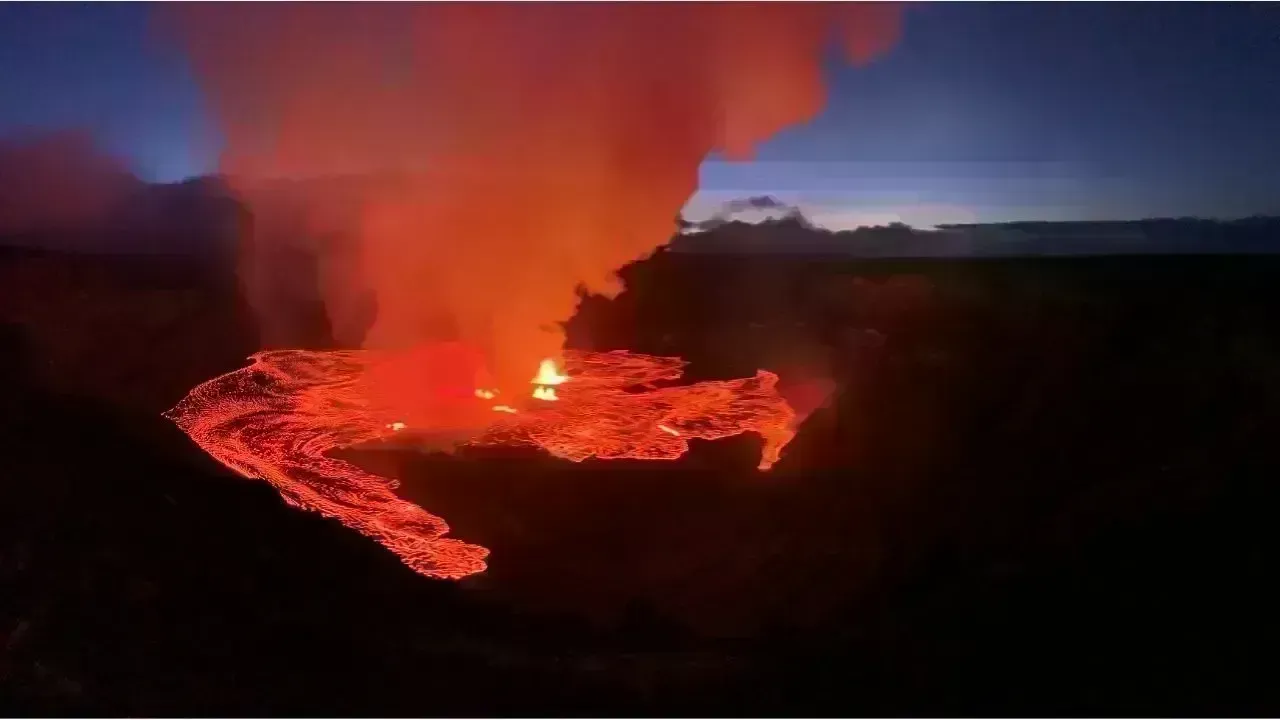
Kīlauea, one of the most closely monitored volcanoes globally, captured significant attention as it erupted once more, ejecting lava into the air, darkening the skies with ash, and transforming the crater floor. This ongoing volcanic activity not only showcases the volcano's dynamic nature but also spurs intrigue and scientific inquiry.
This latest burst occurred after nearly a year of sporadic eruptions and signifies that the magma reservoir at the summit remains active and under pressure. While offering mesmerizing visuals, it also serves as a testament to the unpredictable qualities of volcanic systems.
This eruption represents one of the most vigorous activities following a series of lava bursts over the previous year. The Halemaʻumaʻu crater has been the scene of continuous explosive events since late 2024, with each contributing to its evolving geological structure.
In the lead-up to this eruption, scientists observed heightened seismic activity, increased gas emissions, and subtle inflations of the crater’s floor, all indications of pressurized magma movements beneath.
Located over a perpetually hot magma source, Kīlauea produces ongoing eruptions as molten rock rises, building pressure within its underground channels. This buildup results in explosive lava fountaining when gas bubbles expand rapidly.
This pressure-erupt-refill cycle has been observed repeatedly, with the latest eruption confirming this pattern while exhibiting remarkable features.
The eruption commenced with sudden seismic tremors followed swiftly by multiple cracks in the crater floor. Within moments, lava fountains surged upwards, signifying the start of a vigorous eruptive phase.
Witnesses noted vibrant plumes and blazes of orange across the crater, with steam clouds carried by the wind, visible even from safe distances.
During the peak of the eruption, lava reached breathtaking heights, even rivaling skyscrapers, creating a mesmerizing display that awed both locals and scientists.
The intensity of the fountains varied, pulsing as gas escaped from the vents and illuminating the entire summit area.
This event was especially notable for its triple-vent eruption, with two openings on the northern part of the crater floor and a third more powerful vent to the south. Such dual-vent eruptions are infrequent and provide significant insights into the subterranean magmatic pathways.
Post-eruption, substantial new lava layers reshaped much of Halemaʻumaʻu’s surface. New plateau formations emerged, merging with older lava deposits.
Scientists monitor these transformations closely as they reveal critical insights into the long-term behavior of the volcano.
The eruption produced a considerable ash plume, which spread fine particles across the area, lightly dusting downwind locations. Residents in the southwest vicinity reported slight ashfall without significant disruption.
However, elevated sulfur dioxide levels temporarily affected air quality, prompting health advisories for those with respiratory concerns.
The eruption damaged a monitoring camera located near the summit’s edge. As lava fountains rose, the intense heat and molten debris overwhelmed the vicinity, highlighting the unpredictable nature of volcanic activities.
Beneath Kīlauea lies a deeply interconnected magma system, with magma accumulation creating pressures conducive to periodic eruptions.
Every eruption momentarily alleviates this pressure, only for the magma reservoir to refill from deeper mantle supplies, maintaining a cycle of “reset and recharge.”
Gas pressure significantly influences eruption dynamics. When gas trapped in rising magma expands at the surface, it can create explosive jets of lava.
The considerable heights of lava fountains in this instance suggest a high gas content and vigorous pressure release.
The cyclic heating and cooling within Kīlauea weaken the external crust, forming fissures and new channels for magma escape.
This explains the simultaneous eruption from multiple vents—a result of uniformly distributed pressure across several weak zones.
The release of volcanic gases may irritate the skin, eyes, and lungs. Although levels remained manageable, advisories were issued for at-risk individuals to limit outdoor exposure.
Vog, a smog formed from sulfur dioxide interactions, may reduce visibility for those in downwind areas.
While the eruption posed minimal direct threat to urban areas, access to certain trails within Hawaiʻi Volcanoes National Park was restricted. The park remains open for visitors, who are encouraged to stay within designated safe zones.
The spectacle, despite safety concerns, has attracted many visitors keen to witness the vivid displays of lava and smoke.
While volcanic eruptions can initially harm the environment, they contribute nutrients to enrich the soil, fostering vegetation growth over time. The lava from this event remained contained, leading to minimal immediate environmental disruption.
However, nearby vegetation may temporarily suffer due to gas emissions.
With the ongoing pattern of eruptions observed over the past year, experts anticipate further episodes. The magma supply shows no signs of waning, with a robust recharge cycle evident.
Future eruptions may maintain a comparable pattern, although changes in eruptive styles cannot be dismissed.
Currently, eruption activity is confined within Halemaʻumaʻu. Yet, any fractures in the crater walls or excessive pressure could pave the way for new lava pathways.
Scientists diligently monitor seismic shifts, ground deformation, and gas emissions for early indicators of a potential change in eruption zones.
Kīlauea is notorious for extended eruptive phases lasting from months to years. Current cycles may persist well into the foreseeable future, emphasizing the need for all stakeholders to remain vigilant and informed.
The sweeping visuals of soaring lava jets left an unforgettable impression, even from official viewpoint areas, lighting the night sky and casting reflections across crater surfaces.
These unique triple-vent events reveal crucial information about underground processes and are incredibly valuable for ongoing scientific studies.
For the indigenous Hawaiians, Kīlauea embodies much more than geological significance; it is a potent cultural symbol intertwined with the goddess Pele, with every eruption echoing the region's heritage and natural power.
Kīlauea's recent eruption not only showcased spectacular natural beauty but also underscored its scientific relevance. With its impressive lava fountains and multiple vents, the event highlighted the volcano's relentless activity.
Fortunately, the eruption remained within the crater, sparing nearby communities from threats while reminding all of the inherent unpredictability of volcanic behavior.
As researchers analyze the recent events, Kīlauea continues to warrant global attention. The rising magma beneath Hawaii’s Big Island ensures that this dynamic volcano will remain in the spotlight.
This article serves merely to summarize the latest volcanic activity. Conditions can evolve quickly; readers should refer to official authorities for timely updates.








Anticipated Dates for UAE Eid Al Adha 2026 Unveiled by Astronomical Experts
Experts predict Eid Al Adha 2026 in the UAE to start on May 27, prompting early holiday planning amo

DAE Achieves Remarkable Growth in Q1 2026 With Record Revenue
Dubai Aerospace Enterprise announces impressive financial results for Q1 2026, reflecting a surge in

Price Increase for Sony PS5 in Southeast Asia Effective May 1
Sony announces a price increase for the PS5 across Southeast Asia starting May 1, 2026, impacting ga

Potential ‘Super El Niño’ in 2026: Understanding the Climate Risks
Could a Super El Niño emerge in 2026? Discover its implications and potential global climate impacts

Global Energy Crisis Intensifies: Markets React to Oil Supply Challenges
Markets are on edge as oil disruptions escalate, influencing prices and economic stability. Explore

Must-See Tourist Spots in London You Can't Overlook
Explore London's essential attractions, from royal landmarks to vibrant markets, ensuring an unforge




