Post by : Saif Nasser
Japan’s Prime Minister has warned that the ongoing Iran war and the resulting oil crisis are having a serious impact on countries across the Asia-Pacific region. The statement highlights growing concerns about energy supply, rising costs, and economic pressure in one of the world’s most important regions.
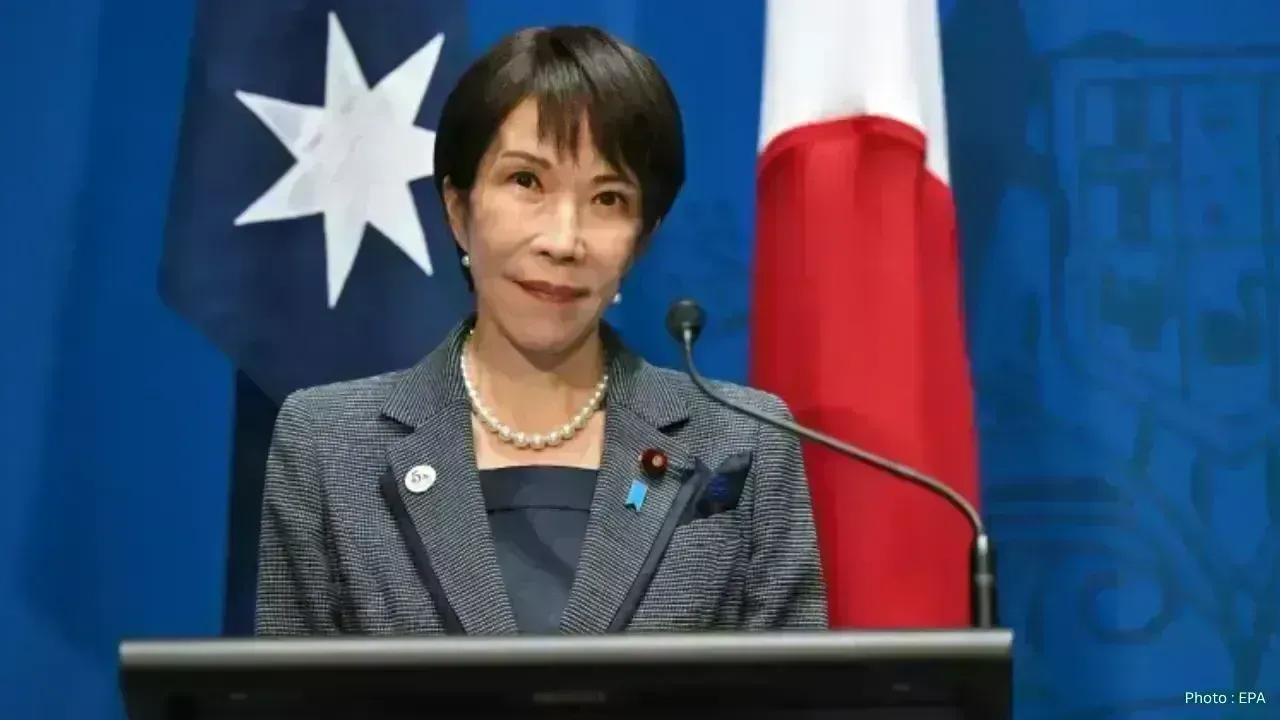
Sanae Takaichi made the remarks during a visit to Australia, where she discussed energy security and cooperation with regional partners. She said the current situation is causing an “enormous impact” on the Asia-Pacific due to disruptions in global oil supply.
The main reason behind this crisis is the disruption in shipping through the Strait of Hormuz, a key route for global oil transport. Around one-fifth of the world’s oil normally passes through this narrow waterway. A large share of this supply—nearly 80 percent—is sent to Asian countries.
Because of the conflict, shipping in the Strait has been reduced, creating a shortage of oil supply. This has led to rising fuel prices and growing pressure on economies that depend heavily on imported energy.
Asia-Pacific countries are among the most affected because they rely strongly on oil from the Middle East. Nations like Japan, India, China, and South Korea depend on this route for a major part of their energy needs.
Japan itself is highly dependent on imported oil, with most of its supply coming from the Middle East. This makes the country especially vulnerable during such crises. Even though Japan has large reserves, the ongoing disruption is still creating economic pressure and uncertainty.
The impact is not limited to fuel prices alone. Rising energy costs affect many parts of daily life, including transportation, electricity, and manufacturing. Businesses may face higher production costs, which can lead to increased prices for goods and services.
In response to the crisis, Japan and Australia have agreed to work more closely on energy security. The two countries plan to strengthen cooperation in areas such as fuel supply and critical minerals, aiming to reduce dependence on unstable regions.
This move shows that countries are now looking for long-term solutions to avoid similar problems in the future. Diversifying energy sources and building stronger partnerships are becoming key strategies.
The crisis has also highlighted a larger issue—the heavy dependence of many countries on a single region for energy supply. When conflict affects that region, the impact spreads quickly across the world.
From an editorial point of view, this situation is a warning for global leaders. It shows how closely connected energy, politics, and economic stability are. A conflict in one part of the world can create serious problems far beyond its borders.
The Asia-Pacific region, which is a major driver of global growth, is now facing new challenges because of this crisis. If the situation continues, it could slow down economic progress and increase financial pressure on governments and people.
At the same time, this crisis may also push countries to invest more in alternative energy sources such as solar, wind, and nuclear power. Reducing dependence on oil could help improve long-term stability.
For now, the focus remains on managing the immediate impact. Governments are working to secure supplies, control prices, and protect their economies from further damage.
The warning from Japan’s Prime Minister makes it clear that the situation is serious. The coming weeks will be important in deciding whether the crisis improves or continues to affect millions of people across the Asia-Pacific region.








DAE Achieves Remarkable Growth in Q1 2026 With Record Revenue
Dubai Aerospace Enterprise announces impressive financial results for Q1 2026, reflecting a surge in

Price Increase for Sony PS5 in Southeast Asia Effective May 1
Sony announces a price increase for the PS5 across Southeast Asia starting May 1, 2026, impacting ga

Potential ‘Super El Niño’ in 2026: Understanding the Climate Risks
Could a Super El Niño emerge in 2026? Discover its implications and potential global climate impacts

Global Energy Crisis Intensifies: Markets React to Oil Supply Challenges
Markets are on edge as oil disruptions escalate, influencing prices and economic stability. Explore

Must-See Tourist Spots in London You Can't Overlook
Explore London's essential attractions, from royal landmarks to vibrant markets, ensuring an unforge

Ultimate Guide to Snagging Cheap Flights in 2026
Unlock the secrets to booking affordable flights in 2026 with insightful tips and strategies tailore




