Post by : Priya
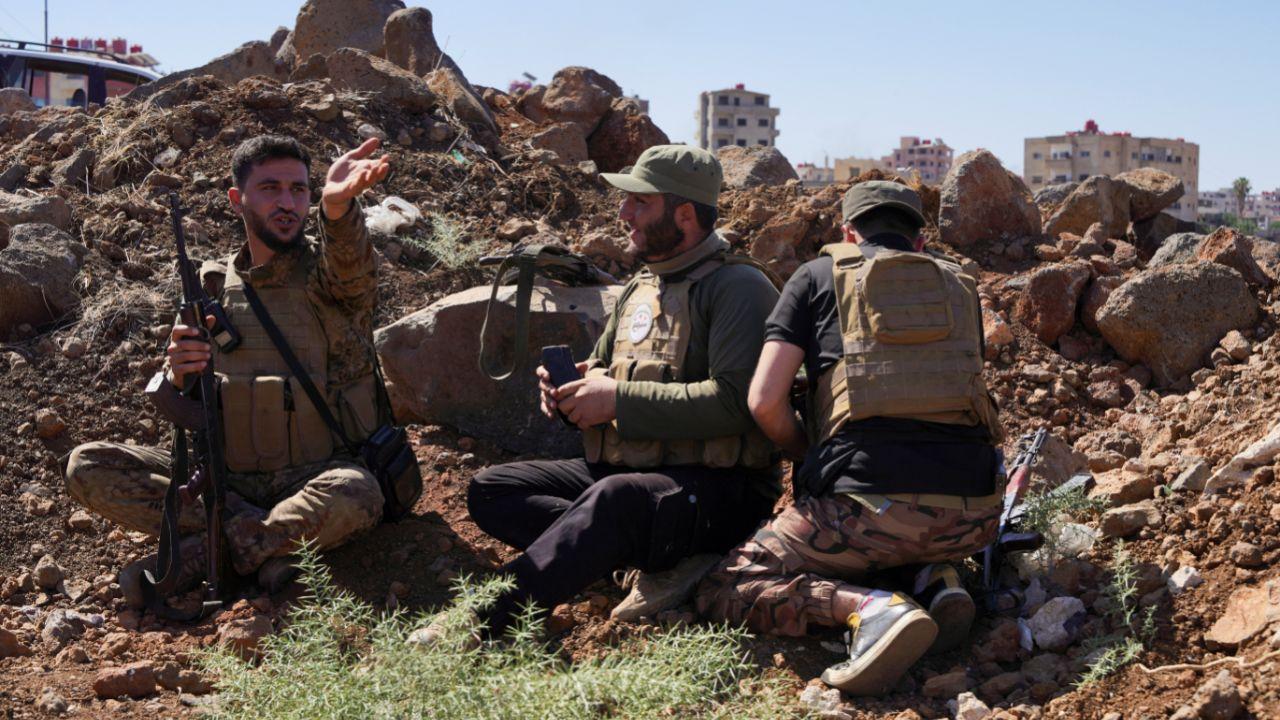
Photo:Reuters
The Middle East, long troubled by conflict and tension, has once again witnessed a military escalation—this time centered around the protection of a minority group, the Druze. On July 15, 2025, Israel launched targeted airstrikes in southern Syria, claiming it was a necessary action to protect Druze villages near its border from armed threats. This development, while seemingly focused on a single operation, touches on a deeper and more complex web of regional alliances, religious loyalties, historical grievances, and modern-day geopolitical calculations.
Who Are the Druze?
Before we discuss the airstrike itself, it’s important to understand who the Druze are and why they matter in this situation.
The Druze are a small but influential religious group that originated in the Middle East in the 11th century. They live mainly in Syria, Lebanon, and Israel. The Druze faith is monotheistic and shares some beliefs with Islam, Christianity, and other religions, but it is distinct and secretive. The Druze community is known for being tightly knit, loyal to their countries of residence, and for maintaining strong ties across borders.
In Israel, the Druze population plays a unique role. Unlike most other Arab citizens, many Israeli Druze serve in the military and public service. In Syria, however, the Druze have often found themselves caught between warring factions during the country's long civil war. This has left them vulnerable and sometimes viewed with suspicion by different sides.
What Happened?
On the night of July 15, 2025, Israeli fighter jets carried out several airstrikes in southern Syria. The targets were reportedly militant bases or weapons storage facilities near the Golan Heights, a disputed area that Israel captured from Syria in 1967 and later annexed—a move not recognized internationally.
According to Israeli military sources, the strike was aimed at preventing an imminent attack on Druze villages near the border. These threats were believed to be coming from Iranian-backed militias or Hezbollah fighters operating in the area.
Syrian state media reported explosions in the Sweida and Daraa provinces, claiming damage to infrastructure and the possibility of civilian injuries. Syrian authorities quickly condemned the strikes, calling them a breach of sovereignty.
Why Did Israel Act?
Israel has a clear policy: it will not allow Iran or its allies, such as Hezbollah, to build up military strength near its northern borders. This policy has resulted in dozens of airstrikes in Syria over the past few years, aimed at stopping weapons transfers and military build-ups.
But this time, Israel’s justification carried an added emotional and political weight—the protection of the Druze.
For Israel, the Druze are not just a minority group across the border. Many Israeli Druze have family ties to communities in Syria. In 2015, for example, Israeli Druze protested against what they saw as Israel’s inaction when Druze villages in Syria were attacked by extremist groups. Since then, Israel has made it clear that it will not stand by if the Druze are targeted again.
By launching this latest strike, Israel is sending a strong message: it will defend its allies, even across borders, when it sees real danger.
What Was the Immediate Impact?
Reports from southern Syria described large explosions, fires, and possible injuries. While the exact damage has not been confirmed, the psychological impact was instant. Residents of the area reported fear and uncertainty, unsure if more strikes were coming.
In Israel, the airstrike was widely supported, especially among the Druze community. Leaders praised the government for taking swift action to prevent violence against their people.
However, not everyone was pleased. Syrian officials labeled the attack an act of aggression, and some regional observers warned that such actions could lead to broader escalation, especially if Hezbollah or Iranian forces decide to retaliate.
The US Response
Interestingly, the United States had just days earlier warned Israel to be cautious with military operations in southern Syria. Washington fears that frequent strikes could lead to a wider regional conflict, especially with the growing involvement of Iran, Hezbollah, and other armed factions.
At the same time, the U.S. understands Israel’s security concerns and its special relationship with the Druze. American officials called for restraint while acknowledging that every nation has the right to defend itself and its allies.
The Role of Iran and Hezbollah
To fully grasp the tension, one must consider the role of Iran and its close ally, Hezbollah.
Iran has been building influence in Syria for more than a decade, supporting the Assad government during the civil war and helping create a network of loyal militias across the country. Hezbollah, the Lebanese militant group backed by Iran, has used the conflict in Syria to expand its presence near the Israeli border.
For Israel, this growing presence is a red line. Hezbollah has thousands of rockets aimed at Israeli cities, and any additional military infrastructure in Syria is viewed as a direct threat.
It’s within this complex backdrop that the latest airstrike took place—not just to protect the Druze, but to remind Iran and its allies that Israel remains alert and ready to act.
How Does This Affect the Druze?
For the Druze community—both in Syria and in Israel—this event is deeply personal. In Syria, the Druze have long tried to stay neutral in the country’s many conflicts, but neutrality often makes them a target.
In Israel, the Druze are a respected minority with a long record of loyalty to the state. Many Druze Israelis see the government’s action as a moral obligation to protect their cousins and kin across the border.
At the same time, some worry that increased military action could actually make the Druze in Syria more vulnerable, especially if they are seen as being protected by Israel.
The Risk of Escalation
Military experts warn that while this strike may have stopped an immediate threat, it also increases the chances of retaliation. Hezbollah has shown in the past that it responds to Israeli actions—sometimes immediately, sometimes with delay.
If a response does come, it could involve rocket fire into Israel, ambushes along the border, or attacks on Israeli interests abroad. This would likely lead to another round of military action, pulling both countries into a dangerous cycle of violence.
International Reactions
So far, global reactions have been mixed. Western countries have mostly stayed silent, not wanting to take sides in a complex local matter. Arab countries, including Jordan and Egypt, have expressed concern about Israel’s repeated strikes in Syria but have also remained cautious in their statements.
The United Nations has called for all sides to avoid actions that could lead to civilian harm or regional instability. Diplomats behind the scenes are urging Israel, Syria, and Lebanon to lower tensions.







DAE Achieves Remarkable Growth in Q1 2026 With Record Revenue
Dubai Aerospace Enterprise announces impressive financial results for Q1 2026, reflecting a surge in

Price Increase for Sony PS5 in Southeast Asia Effective May 1
Sony announces a price increase for the PS5 across Southeast Asia starting May 1, 2026, impacting ga

Potential ‘Super El Niño’ in 2026: Understanding the Climate Risks
Could a Super El Niño emerge in 2026? Discover its implications and potential global climate impacts

Global Energy Crisis Intensifies: Markets React to Oil Supply Challenges
Markets are on edge as oil disruptions escalate, influencing prices and economic stability. Explore

Must-See Tourist Spots in London You Can't Overlook
Explore London's essential attractions, from royal landmarks to vibrant markets, ensuring an unforge

Ultimate Guide to Snagging Cheap Flights in 2026
Unlock the secrets to booking affordable flights in 2026 with insightful tips and strategies tailore




