Post by : Bianca Suleiman
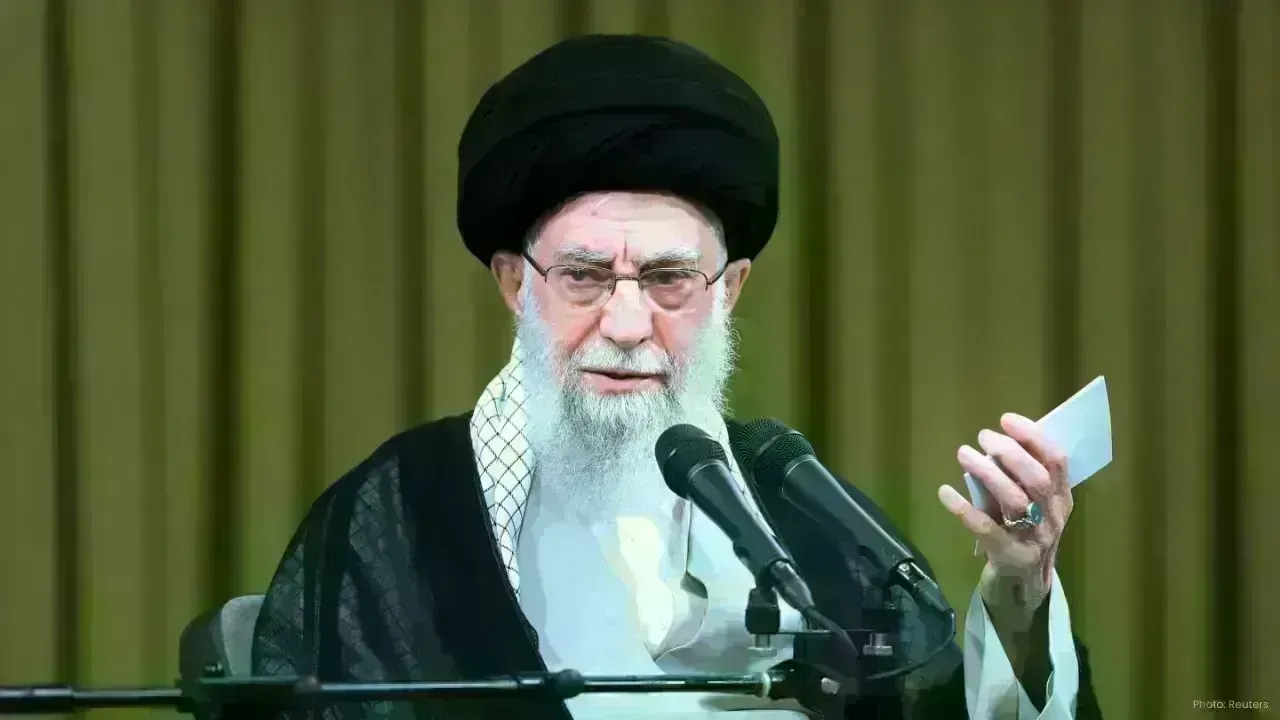
Iran is currently experiencing one of its most significant waves of protests in recent years, fueled by escalating economic hardship. Supreme Leader Ayatollah Ali Khamenei recently stated that “rioters must be dealt with decisively,” a comment interpreted as a directive for security forces to intensify their measures.
These protests, ignited by the sharp devaluation of Iran’s currency and growing living costs, are now well into their second week, with reports of at least 10 fatalities as confrontations between demonstrators and security personnel become increasingly violent. Despite a heavy crackdown, there are no indications that the protests are subsiding.
Khamenei's remarks, which aired on state media, sought to differentiate between ordinary citizens dissatisfied with the economy and those labeled as “rioters.” He suggested that officials should heed the voices of the protesting populace but rejected any discussions with those accused of disrupting social order. As has been the case in earlier protests, he assigned blame to foreign agents, such as the U.S. and Israel, for inciting this latest unrest, despite lacking substantiating proof.
The situation has garnered international scrutiny, particularly after U.S. President Donald Trump cautioned Tehran that the U.S. would respond if peaceful protesters faced violent repression. His statements provoked stern responses from Iranian officials, several of whom threatened reprisal against U.S. military forces stationed in the region. Tensions heightened further when Trump claimed the U.S. had apprehended Venezuela’s president, a close ally of Iran.
The violence associated with the protests has taken a worrying turn. In Qom, a grenade blast resulted in one death, with officials claiming the individual intended to launch an attack. Meanwhile, in Kermanshah province in western Iran, a member of the Basij paramilitary was killed during a separate armed assault. Online videos depict flames engulfing streets and a significant security presence across various cities.
Human rights organizations report that protests have spread to over 100 locations across 22 provinces, marking the largest scale of protest since 2022, triggered by the death of Mahsa Amini while in police custody. Although the current protests have not yet reached that level of intensity, the themes have shifted from economic grievances to direct challenges against Iran’s ruling regime.
The government led by President Masoud Pezeshkian has attempted a gentler approach, indicating a readiness to address public grievances. Nonetheless, the swift decline of the rial has constrained the government’s capacity to alleviate pressures, perpetuating resentment among merchants, business owners, and everyday citizens.
This unrest arises during a precarious moment for Iran, which continues to navigate the repercussions of last year's confrontation with Israel and ongoing Western sanctions. Tehran has recently announced it ceased uranium enrichment at all facilities, suggesting a willingness for dialogue, yet escalating instability domestically complicates Iran's prospects for the future.






Achieve Radiant Skin with This Simple Rice Flour Treatment
Transform your skincare routine! Discover how a rice flour mix can restore your skin's glow without

Meta Unveils Subscription Plans for Instagram, Facebook, and WhatsApp
Meta introduces new subscription plans for users of Instagram, Facebook, and WhatsApp, featuring enh

Suvarna Joy on Education Leadership, Resilience, and Building Purpose Through Adversity in the UAE
Suvarna Joy shares her journey of education leadership, motherhood, faith, and resilience within the

Anticipated Dates for UAE Eid Al Adha 2026 Unveiled by Astronomical Experts
Experts predict Eid Al Adha 2026 in the UAE to start on May 27, prompting early holiday planning amo

DAE Achieves Remarkable Growth in Q1 2026 With Record Revenue
Dubai Aerospace Enterprise announces impressive financial results for Q1 2026, reflecting a surge in

Price Increase for Sony PS5 in Southeast Asia Effective May 1
Sony announces a price increase for the PS5 across Southeast Asia starting May 1, 2026, impacting ga




