Post by : Raina Nasser
Photo: Reuters
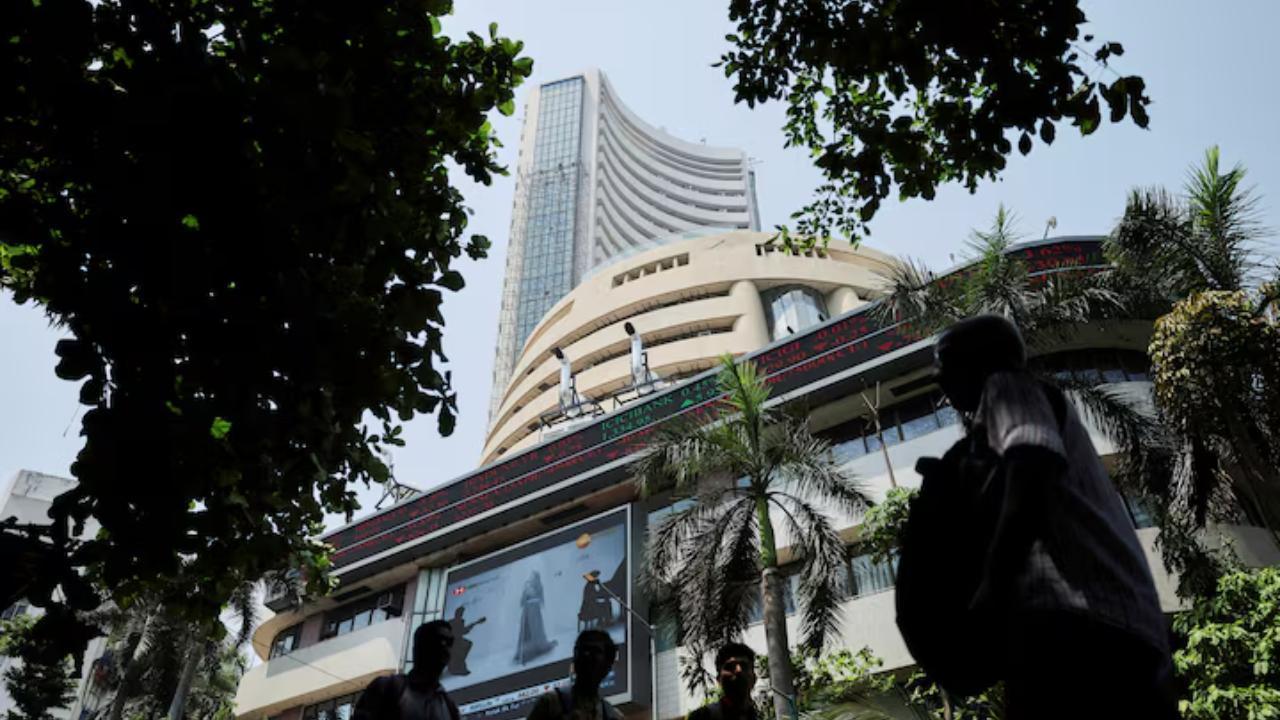
Indian stock markets began the week on a weaker note as investors responded to disappointing earnings from major technology companies and growing concerns over global tariff policies. Both the Nifty 50 and the BSE Sensex, India’s two main stock market indices, opened in negative territory and continued to trade lower through the day.
By late morning, the Nifty 50 index had fallen by 0.25%, while the Sensex was down by 0.31%. The declines were mainly driven by losses in the information technology sector, with several top companies reporting lower-than-expected earnings. Among the leading laggards were Tata Consultancy Services (TCS), Infosys, and Wipro, all of which showed negative trends after releasing their latest quarterly results.
Investor concerns were further heightened by news of fresh tariff discussions in the United States. Reports indicated that the U.S. government is considering the introduction of new tariffs targeting imports from Europe and other regions. Although India was not directly named in the initial reports, the possibility of wider global trade restrictions has made Indian markets cautious, especially in export-heavy industries like technology and manufacturing.
Market analysts pointed out that while the overall economic outlook for India remains positive, short-term volatility is expected to persist due to external pressures. With Indian IT firms earning a large share of their revenue from clients in the United States and Europe, any slowdown in these regions or rising trade barriers could impact future growth prospects. As a result, many investors decided to book profits and reduce exposure to technology stocks in the current session.
The negative performance was not limited to IT companies. Banking and financial stocks also showed weakness in the early part of the trading day. However, some sectors managed to remain stable, including energy and certain mid-cap stocks, where select companies reported positive developments.
Experts in Mumbai’s financial circles have indicated that the market correction could be temporary, depending on how quickly global trade tensions ease and whether domestic earnings show improvement in the coming weeks. Many investors are also looking towards upcoming corporate announcements and inflation data releases, which could influence market sentiment further.
On the global front, Asian markets were mixed, with some key indices in China and Japan managing to hold steady despite the broader concerns. However, analysts noted that the Indian markets appeared more sensitive due to the earnings season and the country’s close economic ties to Western markets.
The drop in Indian indices follows a period of strong market performance, with both the Sensex and Nifty having gained nearly 30% over the past year. Financial experts are advising investors to approach the market cautiously in the short term, suggesting portfolio diversification to minimize risks from any further global economic shocks.
The currency markets also reacted slightly, with the Indian rupee showing minor weakness against the U.S. dollar. Forex traders attributed this to the cautious market tone and concerns over foreign investment flows amid global uncertainty.
In response to the market movements, financial advisors have suggested keeping a close watch on the IT sector’s performance in the next few quarters. Several companies are expected to adjust their growth forecasts based on global demand trends and the evolving trade environment. Meanwhile, domestic factors such as government infrastructure spending, reforms, and rural demand continue to provide support to India’s broader economic outlook.
Institutional investors, both domestic and international, are expected to closely monitor upcoming policy decisions from central banks, especially the U.S. Federal Reserve. Any changes in interest rates or further geopolitical tensions could also influence Indian market directions in the near future.
Overall, today’s decline reflected a cautious mood among market participants, driven largely by weak corporate earnings in key sectors and rising fears of an unstable international trade environment. Market watchers suggest patience and balanced investment strategies as the best course of action during such uncertain times.










DAE Achieves Remarkable Growth in Q1 2026 With Record Revenue
Dubai Aerospace Enterprise announces impressive financial results for Q1 2026, reflecting a surge in

Price Increase for Sony PS5 in Southeast Asia Effective May 1
Sony announces a price increase for the PS5 across Southeast Asia starting May 1, 2026, impacting ga

Potential ‘Super El Niño’ in 2026: Understanding the Climate Risks
Could a Super El Niño emerge in 2026? Discover its implications and potential global climate impacts

Global Energy Crisis Intensifies: Markets React to Oil Supply Challenges
Markets are on edge as oil disruptions escalate, influencing prices and economic stability. Explore

Must-See Tourist Spots in London You Can't Overlook
Explore London's essential attractions, from royal landmarks to vibrant markets, ensuring an unforge

Ultimate Guide to Snagging Cheap Flights in 2026
Unlock the secrets to booking affordable flights in 2026 with insightful tips and strategies tailore




