Post by : Priya
Photo:Reuters
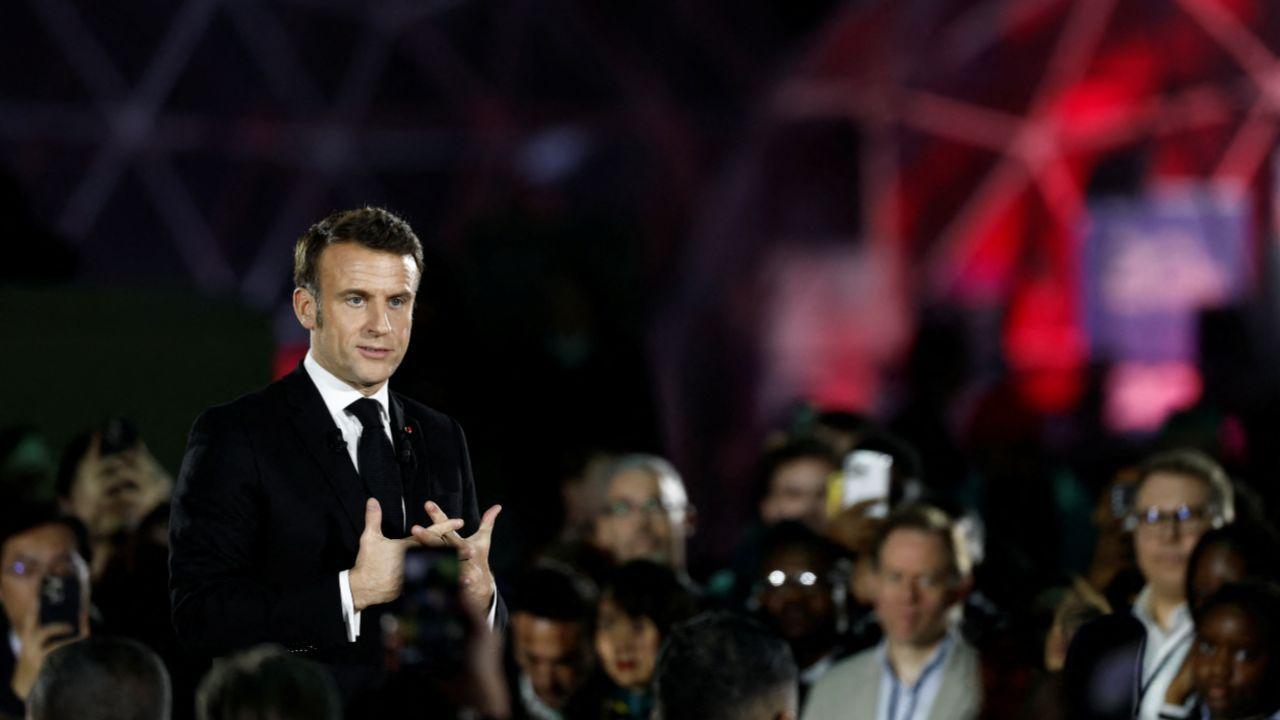
In a bold and far-reaching speech delivered in Brussels, French President Emmanuel Macron has urged European Union leaders to come together and create a unified system of rules to manage the use of modern smart technologies. He warned that the rapid development of these tools—especially those capable of making decisions on their own—is changing the world in ways that require urgent and thoughtful responses.
President Macron’s remarks have sparked fresh discussion about how Europe should manage the growing power of advanced technology while protecting its values of fairness, human dignity, and privacy.
A Race Europe Cannot Afford to Lose
In his speech, President Macron made one thing very clear: Europe is at a turning point. Around the world, countries like the United States and China are moving fast to build powerful technology tools. These nations are also setting rules that suit their own interests.
Macron warned that if Europe does not act quickly and wisely, it could be forced to follow foreign rules that do not reflect the values or needs of European societies. He said, "We must decide our own future. We cannot let others shape the digital world we live in."
He stressed that Europe must act together—not as 27 different countries, but as one united voice—if it wants to remain strong and independent in the global tech race.
The Need for a Common System
President Macron’s key proposal is the creation of a Europe-wide framework that would guide how smart technologies are developed, used, and monitored. He argued that without shared rules, countries may end up with conflicting laws that create confusion and delay progress.
A common framework, he said, would:
Protect people's privacy and rights.
Prevent abuse or harm caused by smart technologies.
Encourage innovation by giving businesses clear guidance.
Ensure fairness and avoid discrimination.
Keep public trust in how these tools are used.
"Technology must serve the people," Macron declared. "It must not control them."
What the New Rules Could Look Like
President Macron outlined several ideas for how a European framework could work. He proposed the creation of a European Technology Council—an independent body made up of experts from all member states. This group would be responsible for:
Creating clear rules for how smart systems should behave.
Reviewing new tools before they are used in public services or markets.
Monitoring ongoing use to ensure companies and governments follow the rules.
Investigating complaints and making recommendations for improvements.
Macron also suggested that special care should be taken when smart technologies are used in sensitive areas like health, education, policing, and the workplace.
Balancing Innovation with Responsibility
President Macron acknowledged the need to balance safety with progress. He said Europe should not block innovation but guide it in the right direction. “We must not be afraid of the future,” he said, “but we must shape it wisely.”
To support this balance, Macron called for more public funding to help European researchers, universities, and start-ups develop cutting-edge tools. He emphasized that innovation should come from within Europe, not just be imported from abroad.
He also highlighted the importance of education. Citizens, especially young people, must be taught how to understand and work with new technologies so they can thrive in the digital age.
The People’s Concerns Must Be Heard
Across Europe, many people are worried about how modern technology is being used. Common fears include:
Loss of privacy and personal data misuse.
Replacement of human workers by machines.
Unfair or biased decisions made by technology systems.
Growing power of large companies with little oversight.
President Macron made it clear that any European rules must address these public concerns directly. He promised that people’s voices would be included in the rule-making process and that strong protections would be put in place to defend individual rights.
Reactions Across Europe
Macron’s proposal received support from several EU leaders. German Chancellor Anna Müller called the plan “wise and necessary,” adding that Europe must take the lead in shaping the future of technology, not just react to it.
The Prime Ministers of Spain, the Netherlands, and Finland also expressed interest in working together to build a common plan.
However, not all reactions were positive. Some leaders from smaller EU countries raised concerns about the cost of setting up a European-wide council. Others feared that too many rules might make it harder for new companies to grow.
Large businesses also shared mixed views. While some welcomed the idea of clear rules, others warned that extra regulation might slow down product launches and make it harder to compete globally.
Why Now?
The call for new rules comes at a time when smart technology is already deeply affecting everyday life. People use these tools in schools, hospitals, banks, and even in their homes through digital assistants. Governments are using smart systems to manage traffic, monitor security, and deliver services more efficiently.
Yet many of these tools are still poorly understood, and few rules exist to guide their use. Without proper oversight, there is a risk of harm—whether through accidents, misuse, or even deliberate abuse.
President Macron’s proposal aims to fill that gap. It is a step toward building trust and making sure Europe’s digital future is one that benefits everyone.





DAE Achieves Remarkable Growth in Q1 2026 With Record Revenue
Dubai Aerospace Enterprise announces impressive financial results for Q1 2026, reflecting a surge in

Price Increase for Sony PS5 in Southeast Asia Effective May 1
Sony announces a price increase for the PS5 across Southeast Asia starting May 1, 2026, impacting ga

Potential ‘Super El Niño’ in 2026: Understanding the Climate Risks
Could a Super El Niño emerge in 2026? Discover its implications and potential global climate impacts

Global Energy Crisis Intensifies: Markets React to Oil Supply Challenges
Markets are on edge as oil disruptions escalate, influencing prices and economic stability. Explore

Must-See Tourist Spots in London You Can't Overlook
Explore London's essential attractions, from royal landmarks to vibrant markets, ensuring an unforge

Ultimate Guide to Snagging Cheap Flights in 2026
Unlock the secrets to booking affordable flights in 2026 with insightful tips and strategies tailore




