
Post by : Shweta
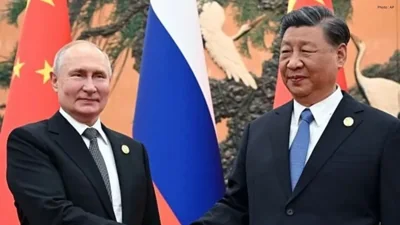
As the high-profile summit between U.S. President Donald Trump and China's President Xi Jinping approaches, experts suggest that Beijing may possess several key advantages during these critical discussions. The agenda is likely to revolve around vital topics such as trade disputes, technology restrictions, tariffs, Taiwan, and the intensifying rivalry between the two major economies. Analysts argue that while both leaders strive to safeguard their national interests, it currently seems that China is in a comparatively stronger negotiating position.
China's sustained economic resilience is a significant factor, especially given the ongoing trade tensions with the U.S. Over recent years, Beijing has decreased its reliance on American markets by fostering trade ties with countries across Asia, the Middle East, Africa, and Latin America. Additionally, through the Belt and Road Initiative, China has bolstered its economic relationships, ensuring its influence prevails despite facing Western-imposed tariffs.
In contrast, the U.S. grapples with inflation issues, political fragmentation, and mounting pressures from businesses struggling amid trade uncertainties. American firms remain intricately linked to Chinese supply chains, particularly in the electronics, pharmaceuticals, and consumer goods industries. This interconnectedness limits Washington's capacity to exert economic pressure without endangering its own businesses and consumers.
In addition, China's burgeoning technological and industrial sectors instill confidence in its negotiating stance. Although the United States has targeted China's tech companies through sanctions, Beijing has advanced its domestic tech initiatives. Investments in areas such as artificial intelligence, electric vehicles, renewable energy, telecommunications, and advanced manufacturing are increasing China's resilience against future U.S. economic measures.
China's diplomatic outreach also enhances its leverage. The nation has been cultivating its international influence, emphasizing its role as a stable economic partner during turbulent times in U.S. politics. Recent efforts to strengthen ties with Global South nations and build connections through BRICS and regional trade agreements serve to enhance China's negotiation position with Washington.
This summit takes place amidst a politically sensitive environment for President Trump, who faces pressure to adopt a tough stance on China while navigating potential economic instability ahead of significant political and economic decisions. Analysts suggest that China is acutely aware of these pressures and may leverage them during discussions.
Taiwan is likely to emerge as a contentious topic during the summit. China's increasing military assertiveness towards Taiwan contrasts sharply with the U.S.’s commitment to support Taipei via military collaboration. Any discord regarding Taiwan has the potential to escalate tensions between these global powers.
Trade policies will inevitably dominate the discussions. Trump has consistently criticized China regarding trade imbalances and intellectual property rights. However, there is a belief within China that it stands on firmer ground, as global markets increasingly depend on its manufacturing, rare earth minerals, and industrial exports.
Additionally, the pivotal role of energy and supply chains is set to be a focus. China is a leading consumer of oil, natural gas, and industrial materials, giving it substantial influence over global commodity markets. Ongoing conflicts and economic uncertainties heighten the necessity for stable trading relationships.
Despite the rivalry, the two nations recognize the need to avert a significant conflict. Economic analysts caution that a serious deterioration in U.S.-China relations could adversely impact global markets, elevate inflation, disrupt supply chains, and inhibit international economic growth. For this reason, many experts believe both leaders will strive to frame the summit as a success, even if substantial disagreements linger.
The outcomes of this meeting could significantly influence future U.S.-China relations across trade, technology, security, and global diplomacy for years. While the U.S. maintains considerable military and economic strength, China's expanding global influence and strategic foresight may provide it with an advantageous position as the summit unfolds.









Anticipated Dates for UAE Eid Al Adha 2026 Unveiled by Astronomical Experts
Experts predict Eid Al Adha 2026 in the UAE to start on May 27, prompting early holiday planning amo

DAE Achieves Remarkable Growth in Q1 2026 With Record Revenue
Dubai Aerospace Enterprise announces impressive financial results for Q1 2026, reflecting a surge in

Price Increase for Sony PS5 in Southeast Asia Effective May 1
Sony announces a price increase for the PS5 across Southeast Asia starting May 1, 2026, impacting ga

Potential ‘Super El Niño’ in 2026: Understanding the Climate Risks
Could a Super El Niño emerge in 2026? Discover its implications and potential global climate impacts

Global Energy Crisis Intensifies: Markets React to Oil Supply Challenges
Markets are on edge as oil disruptions escalate, influencing prices and economic stability. Explore

Must-See Tourist Spots in London You Can't Overlook
Explore London's essential attractions, from royal landmarks to vibrant markets, ensuring an unforge




