Post by : Shakul
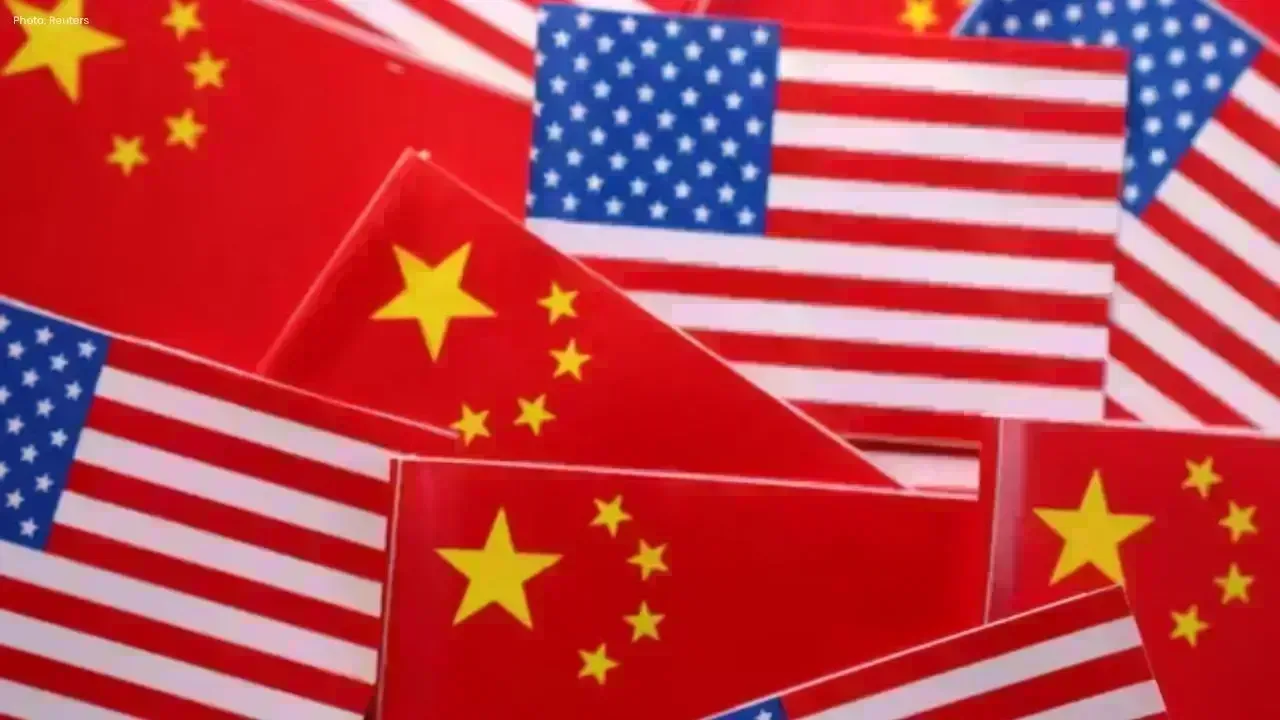
In a firm response to proposed US legislation aimed at restricting China's access to crucial semiconductor technologies, China has voiced strong disapproval as high-level discussions commence between US President Donald Trump and Chinese President Xi Jinping in Beijing. This legislative proposal, known as the MATCH Act, is anticipated to dominate their upcoming discussions.
Introduced last month in the US Congress, the MATCH Act aims to impede Chinese companies from advancing in the production of sophisticated artificial intelligence chips. It seeks to limit China's access to critical semiconductor manufacturing equipment provided by leading tech nations, including the United States, Japan, and the Netherlands, while also introducing more stringent regulations concerning export licenses and maintenance services related to chip production tools.
Chinese officials have openly condemned the proposal, characterizing it as an obstructionist move by the United States against China's technological progress. Reports indicate that American diplomats were summoned to express formal objections to the legislation, and Chinese officials have also engaged with US semiconductor industry representatives in Washington regarding these concerns.
The Ministry of Commerce in China has warned that this prospective legislation could significantly detriment international trade and unsettle the global technology landscape. Officials accused the US of coercing allied nations into participating in what they deemed a technological blockade against China. Should the MATCH Act be enacted, Chinese regulators have vowed to implement necessary measures to safeguard the interests of local tech firms.
Faced with intensifying pressure from the United States, China has already begun to formulate legal responses and counteractions that may come into play if the MATCH Act is ratified. A recent decree authorizes authorities to designate foreign individuals or entities as “Malicious Entities” if found supporting unwarranted foreign constraints against Chinese enterprises. This maneuver demonstrates Beijing's readiness for potential escalations in the ongoing tech rivalry with the US.
Should this legislation proceed, significant international companies such as Dutch firm ASML and Japanese manufacturer Tokyo Electron, which provide critical semiconductor machinery to China, may find themselves under heightened restrictions. Their equipment is fundamental for the production of advanced artificial intelligence chips, integral to current global tech dynamics.
This unfolding situation exemplifies the intensifying competition between the US and China over artificial intelligence, semiconductor technology, and global tech dominance. While the White House has yet to articulate an official stance on the MATCH Act, analysts believe that the forthcoming meeting between Trump and Xi could crucially influence the trajectory of international tech trade amidst escalating geopolitical tensions.









Anticipated Dates for UAE Eid Al Adha 2026 Unveiled by Astronomical Experts
Experts predict Eid Al Adha 2026 in the UAE to start on May 27, prompting early holiday planning amo

DAE Achieves Remarkable Growth in Q1 2026 With Record Revenue
Dubai Aerospace Enterprise announces impressive financial results for Q1 2026, reflecting a surge in

Price Increase for Sony PS5 in Southeast Asia Effective May 1
Sony announces a price increase for the PS5 across Southeast Asia starting May 1, 2026, impacting ga

Potential ‘Super El Niño’ in 2026: Understanding the Climate Risks
Could a Super El Niño emerge in 2026? Discover its implications and potential global climate impacts

Global Energy Crisis Intensifies: Markets React to Oil Supply Challenges
Markets are on edge as oil disruptions escalate, influencing prices and economic stability. Explore

Must-See Tourist Spots in London You Can't Overlook
Explore London's essential attractions, from royal landmarks to vibrant markets, ensuring an unforge




