Post by : Monika
Photo: Reuters
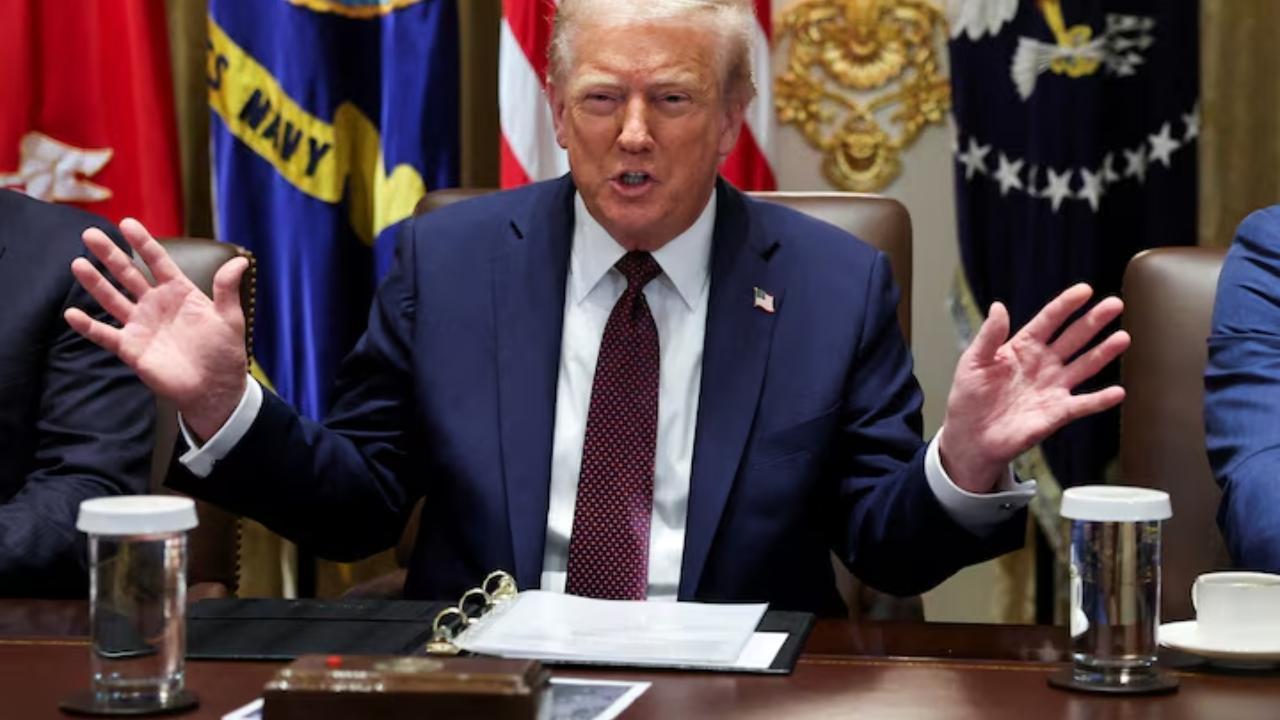
On Wednesday, U.S. President Donald Trump held an important meeting at the White House. The topic was the war in Gaza and what should happen once the fighting stops. Sitting with him at the table were former British Prime Minister Tony Blair and Trump’s son-in-law, Jared Kushner.
The war in Gaza has been going on for months, and millions of people are suffering. Families have lost loved ones, homes have been destroyed, and food has become very hard to find. The meeting was not about ending the fighting right away but about looking ahead—what comes next when the war is finally over.
The group spoke about three big issues: how to free hostages, how to send more food to hungry families, and how to rebuild Gaza when peace comes.
Why This Meeting Was Important
Donald Trump is serving as U.S. president for the second time. When he first came back to office, he promised that the war in Gaza would not last long. But seven months into his new term, the conflict is still raging. Airstrikes, clashes, and shortages continue every day.
Trump now faces pressure not only from Americans but also from leaders around the world. Many want him to show a clear plan, not just for how to end the war, but also for what Gaza’s future will look like once the bombs stop falling.
This is why Tony Blair was invited. Blair, who led Britain from 1997 to 2007, has long worked on Middle East peace efforts. He now runs a group that studies how Gaza can recover after the war. His experience gives him credibility in shaping what comes after the conflict.
Jared Kushner was also included. During Trump’s first presidency, Kushner was the key figure behind the “Abraham Accords,” agreements that improved relations between Israel and several Arab countries. He is seen as someone with deep connections in the Middle East and someone who can offer bold ideas.
A senior White House official described the meeting as a “policy discussion”—the first of several to come.
What They Discussed
1. The Hostage Crisis
The war in Gaza began after Hamas launched a surprise attack and took hostages. Families of those hostages have been living in fear, waiting for news about their loved ones. The meeting focused on ways to negotiate their release. Trump stressed that freeing hostages was one of the top priorities.
Officials did not reveal exact strategies, but they confirmed that different options—diplomatic talks, humanitarian exchanges, and pressure from allies—were being considered. For families, this is a matter of life and death.
2. Sending More Food Aid
Another main issue was hunger in Gaza. With roads blocked, warehouses destroyed, and markets empty, food has become scarce. Children are reported to be going to bed hungry, and many families survive on very little each day.
The leaders discussed ways to deliver more food, water, and medicine safely. One idea was to create special “safe zones” where aid trucks could reach people without being targeted. Another suggestion was to use ships or airlifts to send supplies directly.
Everyone agreed that unless food and aid reached Gaza quickly, the humanitarian crisis would become even worse.
3. Rebuilding Gaza After the War
The final and perhaps most difficult topic was the future of Gaza after the fighting. Thousands of homes, schools, and hospitals have been destroyed. Rebuilding will take years, money, and strong planning.
Trump, Blair, and Kushner began sketching ideas. They spoke about international aid, new housing projects, and programs to bring stability. The hope is to give people in Gaza not only shelter but also jobs, education, and healthcare.
Steve Witkoff, a U.S. special envoy, later said the plan would be “comprehensive” and would reflect humanitarian values. He promised that the world would soon see how thoughtful the approach is.
Looking Back at Trump’s Earlier Ideas
This is not the first time Trump has spoken about Gaza’s future. In February, he proposed a bold and controversial idea: that the United States might oversee Gaza directly and turn it into a safe and developed region. He even called it the “Riviera of the Middle East.”
The idea included massive construction projects, beaches, hotels, and modern neighborhoods. But critics quickly said it was unrealistic and dangerous, especially because it involved moving Palestinians from their current homes. The proposal received widespread backlash and was quietly set aside.
Still, it shows that Trump is willing to think about big changes. Even if that particular plan does not happen, the concept of rebuilding Gaza into a peaceful, stable, and modern place continues to guide discussions.
Why This Matters
What Comes Next?
Trump’s administration may also announce new steps to deliver food, water, and medicine to Gaza. Some officials believe “humanitarian corridors” could be created, giving aid workers safe paths to reach those most in need.
Challenges Ahead
While the meeting gave hope, the road ahead is difficult. Fighting in Gaza has not stopped. Every day brings new reports of airstrikes and casualties. Plans for the future will only matter if the war can be brought to an end.
Another challenge is trust. Many Palestinians doubt U.S. intentions, especially after past proposals. Building trust will require not only words but also real actions—delivering food, protecting civilians, and ensuring that local voices are heard.
International politics also play a role. Countries like Egypt, Qatar, and Turkey are deeply involved in talks. Israel, too, has strong opinions about Gaza’s future. Any plan will need cooperation from many sides.







Anticipated Dates for UAE Eid Al Adha 2026 Unveiled by Astronomical Experts
Experts predict Eid Al Adha 2026 in the UAE to start on May 27, prompting early holiday planning amo

DAE Achieves Remarkable Growth in Q1 2026 With Record Revenue
Dubai Aerospace Enterprise announces impressive financial results for Q1 2026, reflecting a surge in

Price Increase for Sony PS5 in Southeast Asia Effective May 1
Sony announces a price increase for the PS5 across Southeast Asia starting May 1, 2026, impacting ga

Potential ‘Super El Niño’ in 2026: Understanding the Climate Risks
Could a Super El Niño emerge in 2026? Discover its implications and potential global climate impacts

Global Energy Crisis Intensifies: Markets React to Oil Supply Challenges
Markets are on edge as oil disruptions escalate, influencing prices and economic stability. Explore

Must-See Tourist Spots in London You Can't Overlook
Explore London's essential attractions, from royal landmarks to vibrant markets, ensuring an unforge




