Post by : Mina Rahman
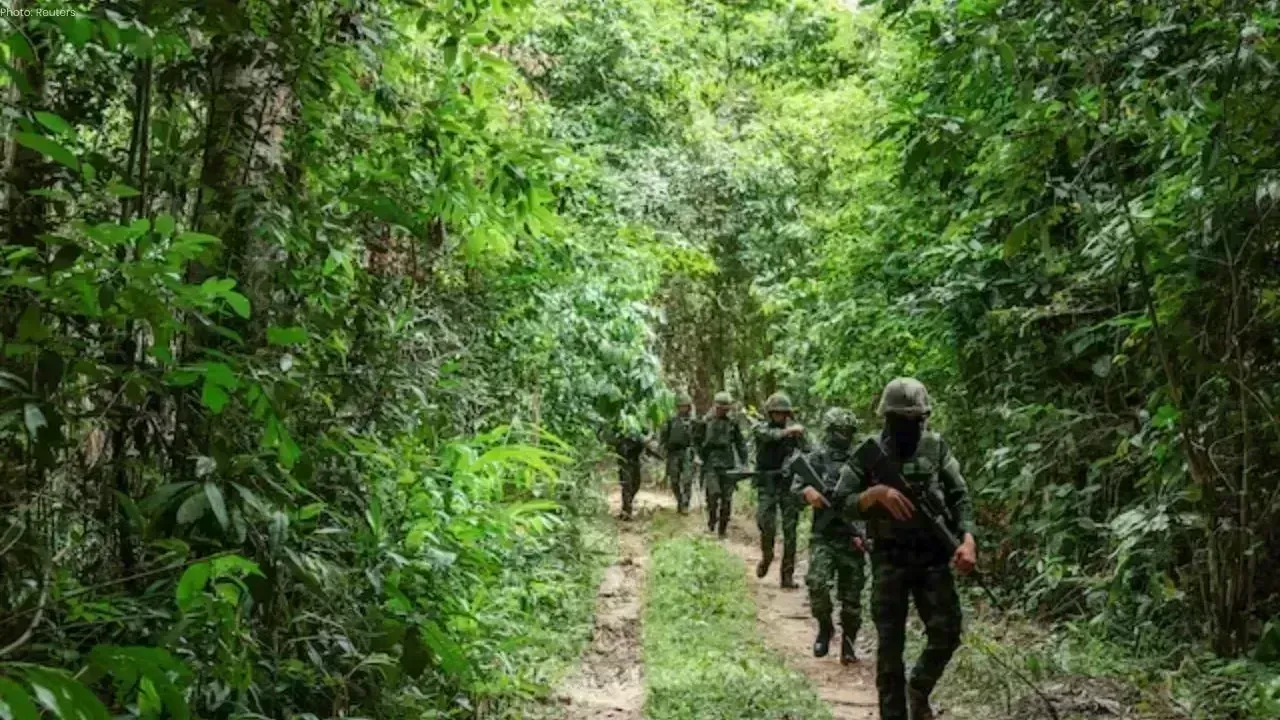
Thailand’s military continues to occupy parts of Cambodia, utilizing barbed wire and shipping containers to block access. This situation jeopardizes the peace agreement established following previous conflicts last year. Cambodian Foreign Minister Prak Sokhonn highlighted that approximately 4,000 families remain unable to return home due to the encroachment of Thai troops, despite a mutual ceasefire reached in December.
In a statement from Phnom Penh, Prak Sokhonn identified at least four locations where Thai soldiers have reportedly crossed into Cambodian territory. He noted that while the current atmosphere may seem tranquil, underlying risks remain, and expressed hopes for Thailand’s compliance with the peace agreement.
The Thai military and government dismissed Cambodia’s allegations, asserting that their forces are adhering to regulations and maintaining their positions post-ceasefire, stating that this should not be interpreted as territorial occupation.
The December conflict was marked by aerial strikes, rocket bombardments, and substantial artillery use, following earlier clashes in July that were mediated by U.S. President Donald Trump. Over 101 casualties were reported in December, displacing more than half a million individuals from both nations. This ongoing struggle is part of a protracted border dispute between Thailand and Cambodia.
Cambodia has requested a meeting of the Joint Boundary Commission to address these border issues, but Thailand has yet to confirm its participation. Prak Sokhonn insisted that resolving the situation regarding occupied villages is crucial for enabling people to return to their homes.
Thailand’s foreign ministry announced plans for discussions to commence following the February 8 elections, emphasizing their commitment to resolving issues through dialogue and expressing a desire to reactivate the Joint Boundary Commission promptly.
The peace accord from December 27 stipulated that neither country would increase troop numbers at the border and allowed for the repatriation of displaced citizens. Prak Sokhonn acknowledged the substantial damage the clashes inflicted on residents’ lives, including extensive destruction of schools, bridges, temples, roads, and other infrastructure.
While Trump played a pivotal role in halting the July confrontations and endorsing a ceasefire in October, he was not able to immediately mitigate the December violence. Alongside Trump and Malaysian Prime Minister Anwar Ibrahim, China also contributed to peace initiatives, dispatching special envoys to both countries in late December.







The Impact of Consistent Small Investments on Wealth Building
Discover how investing small amounts regularly can positively transform your financial future over t

7.5 Magnitude Earthquake Strikes Japan, Tsunami Alerts Issued
Japan experiences a hefty 7.5 quake, prompting tsunami alerts and safety measures. Stay updated on a

Reopening of the Strait of Hormuz: New Regulations to Impact Global Trade
Iran reopens the strategic Strait of Hormuz with new regulations affecting oil transport and global

Top 10 Must-See Attractions in NYC for First-Time Explorers
Discover essential experiences for first-time visitors to NYC, including attractions, culture, and i

Starbucks Engages Boyu Capital for Major Chinese Expansion
Starbucks teams up with Boyu Capital, selling a majority stake to boost growth and adapt to the Chin

Three Individuals Charged in Massive Meth Trafficking Case in Malaysia
In Malaysia, a married couple and another suspect are charged with trafficking 510kg of meth, facing