Post by : Saif Nasser
Indonesia’s ride-hailing industry is heading toward a major shift as the government considers new rules that could greatly improve benefits for millions of drivers. A draft presidential decree under review by President Prabowo Subianto aims to lower company commissions and increase social protection for drivers, a move that could reshape one of Southeast Asia’s largest gig economies.
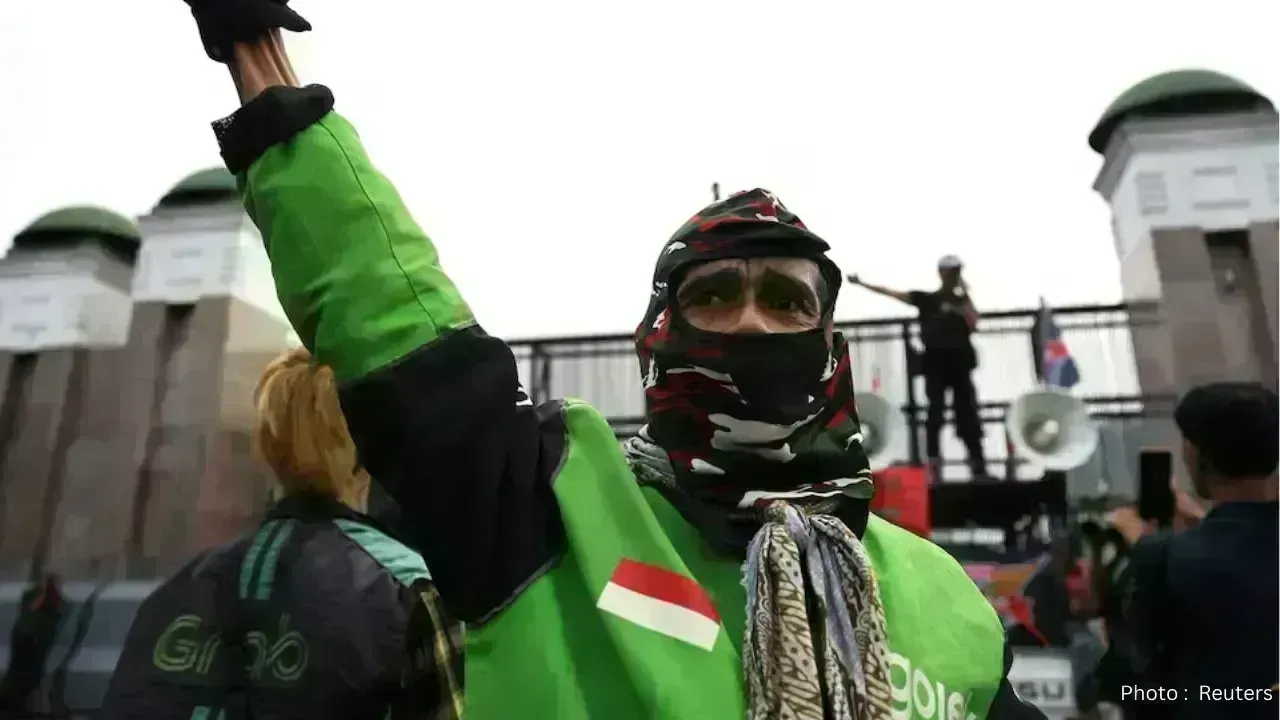
The proposed decree comes at a time when ride-hailing drivers have become a strong political voice in Indonesia. In recent months, drivers joined large student-led protests, drawing national attention to low pay, lack of insurance, and unsafe working conditions. These protests have increased pressure on the government to act quickly.
Under the draft rules, ride-hailing platforms would be allowed to take only 10% commission from each trip, down from the current cap of 20%. This would mean drivers keep a larger share of what customers pay. Indonesia is already the only country in Southeast Asia that limits commissions for two-wheel ride-hailing services, and the new cut would further tighten company margins.
Another key proposal would require companies to fully cover accident and death insurance for drivers. With around seven million delivery and motorcycle taxi drivers across the country, this could add significant costs for platforms. Companies would also have to share health, pension, and old-age insurance payments, which could raise hiring and operating expenses even more.
Industry sources warn that these changes may be hard to sustain. Some fear higher costs could reduce profits and lead companies to limit the number of drivers allowed on their platforms. Ride-hailing firms have long argued that drivers are gig workers, not full-time employees, and therefore should not receive the same benefits.
Driver groups, however, have welcomed the draft decree. Labor unions say the rules could finally offer fair pay and basic protection for workers who depend on ride-hailing as their main source of income. Union leaders have urged the government to ensure the benefits are applied clearly and without hidden conditions.
The timing of the proposal is also important because of concerns over competition. Talks of a possible merger between major ride-hailing companies have raised fears of reduced competition and weaker bargaining power for drivers. Critics believe stronger regulations are needed to protect workers in such a scenario.
President Prabowo’s administration has shown strong support for drivers, often calling them vital to the economy. Experts say the death of a motorcycle taxi driver during earlier protests shocked the public and increased urgency around worker safety and rights.
If enforced through a presidential decree, the new rules could take effect quickly. While this may improve life for drivers, it also raises questions about how companies will adapt. The coming months will be crucial in deciding whether Indonesia can balance worker protection with a sustainable ride-hailing industry.










The Impact of Consistent Small Investments on Wealth Building
Discover how investing small amounts regularly can positively transform your financial future over t

7.5 Magnitude Earthquake Strikes Japan, Tsunami Alerts Issued
Japan experiences a hefty 7.5 quake, prompting tsunami alerts and safety measures. Stay updated on a

Reopening of the Strait of Hormuz: New Regulations to Impact Global Trade
Iran reopens the strategic Strait of Hormuz with new regulations affecting oil transport and global

Top 10 Must-See Attractions in NYC for First-Time Explorers
Discover essential experiences for first-time visitors to NYC, including attractions, culture, and i

Starbucks Engages Boyu Capital for Major Chinese Expansion
Starbucks teams up with Boyu Capital, selling a majority stake to boost growth and adapt to the Chin

Three Individuals Charged in Massive Meth Trafficking Case in Malaysia
In Malaysia, a married couple and another suspect are charged with trafficking 510kg of meth, facing